Your Child Will Not Go Near the Rezzimax. Here Is What to Do
You got it. You read about what it can do. You were hopeful. And then you turned it on and your child left the room.
Or froze. Or started crying. Or told you absolutely not and meant it.
This is one of the most common things parents tell us when they start using Rezzimax at home. The tool that is supposed to calm the nervous system causes an immediate stress response the first time it appears. And it makes complete sense when you understand why.
A child with a dysregulated nervous system is running in a state of chronic threat detection. New sensory input, especially unexpected vibration and sound, gets read as danger before the brain has a chance to assess it. The reaction is not dramatic. It is accurate, given the state the nervous system is in.
The goal is not to push through the resistance. The goal is to change the conditions so the nervous system stops reading the tool as a threat.
Here is how to do that without forcing anything.
Let It Exist Before It Does Anything
The first step is not introduction. It is presence.
Put the Rezzimax somewhere your child can see it. On the table. On the sofa. Near their toys. Do not mention it. Do not draw attention to it. Just let it be there.
Children with sensitive nervous systems need time to process new objects without any expectation attached. The moment you say "do you want to try this", the pressure goes up and the nervous system closes down. When there is no agenda, curiosity has room to develop on its own.
Leave it there for a few days if needed. Some children will pick it up themselves within hours. Others need longer. Neither is wrong.
Turn It On in the Room, Not on the Child
When your child seems comfortable with the object existing, turn it on at a distance. Not near them. Not aimed at them. On your own leg, or on the sofa cushion, or just held in your hand across the room.
Let them hear the sound and feel that nothing bad is happening. Let them see you are relaxed about it.
The nervous system learns from observation as much as from direct experience. Watching a safe person interact calmly with something new is one of the most effective ways to shift a child's threat assessment of that thing. You are giving their brain new information without asking them to do anything.
Do not narrate what you are doing or invite them over. Just let them watch.
Give It to Something They Trust
Before it goes anywhere near your child, let their favourite toy have a go.
This sounds simple and it is. But it works for a specific reason. When a child watches something they are attached to, a soft toy, a favourite figure, receive an experience and come out of it fine, the brain updates its prediction about that experience. The threat level drops.
Hold the Rezzimax gently against a stuffed animal. Keep your own demeanour completely relaxed. You do not need to perform calm. You just need to actually be calm. Children with sensitive nervous systems are exquisitely accurate at reading the adults around them.
You do not need to say much. If anything, less is more. Let the moment be quiet.
Let Them Control the On Switch
When your child shows any curiosity, even just looking at it or coming closer, offer them control before anything else.
Let them press the button. Let them turn it on and off as many times as they want. Let them hold it without it touching their body. Let them put it on the floor and press it from above with their foot.
None of this is wasted time. All of it is nervous system learning. The child is building a map of what this thing does and establishing that they are in charge of the experience. That sense of agency is not a nice extra. It is the thing that makes the next step possible.
A child whose nervous system is chronically in threat mode has very little experience of being in control of sensory input. Every opportunity to practice that rewires something important.
Start Somewhere That Is Not the Face
When they are ready to try it on their body, do not start at the jaw or the teeth. That is the goal eventually but it is not where you begin.
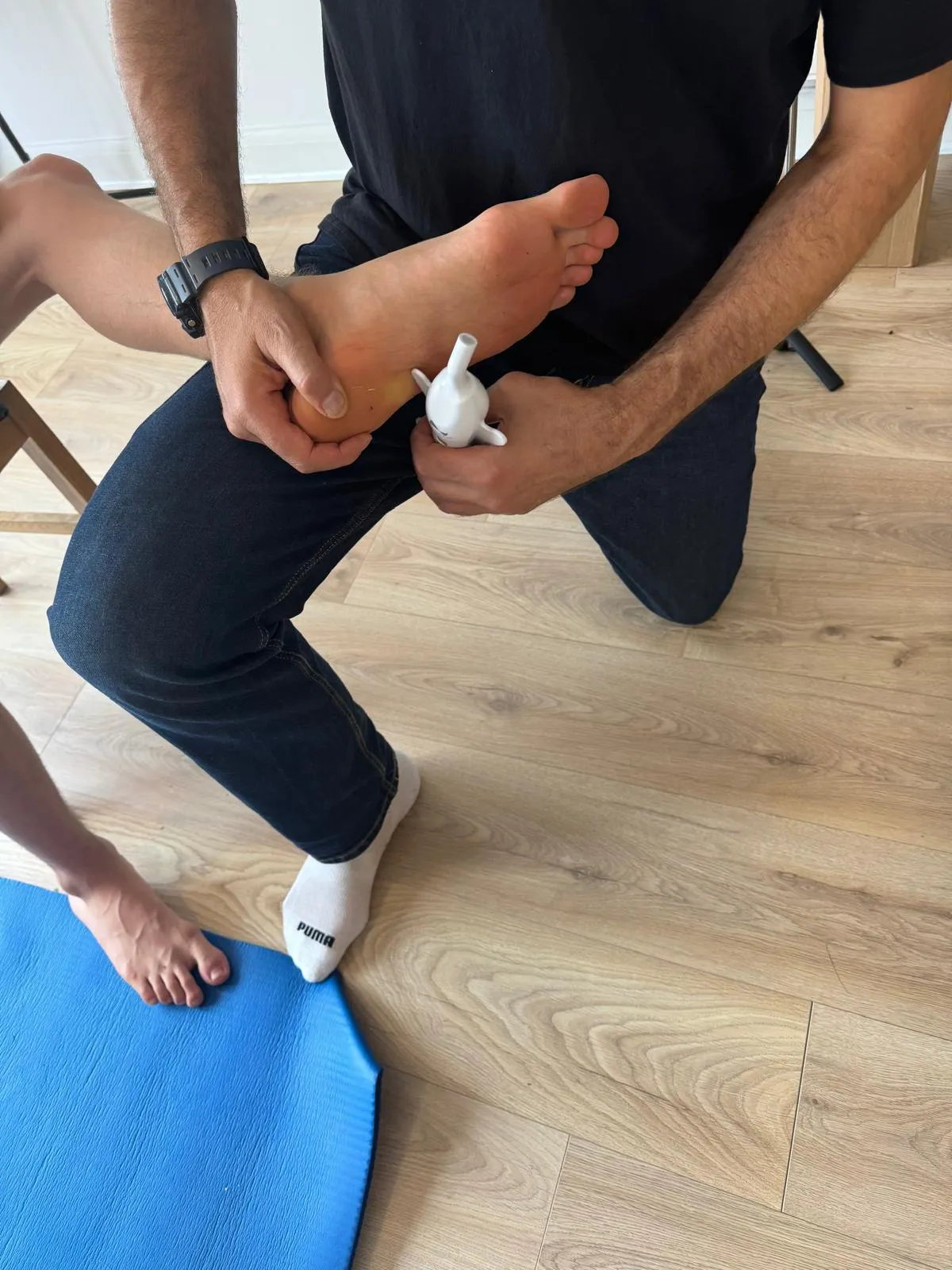
Start at the foot. Or the hand. Or the outer thigh. Somewhere the stakes feel low and the sensation is novel without being threatening.
Stay for seconds, not minutes. Three seconds. Five seconds. See how they respond. If they pull away, stop completely and come back another time. If they seem neutral or curious, stay a little longer. If they ask for more, follow their lead.
The temptation is to push slightly further once the door is open. Resist it. The relationship between your child and this tool matters more than any single session. A short positive experience is worth infinitely more than a longer one that ends in retreat.
Pair It With What Feels Safe
A favourite song in the background. A snack they like. A blanket they prefer. Their choice of which arm or which foot.
These are not distractions. They are nervous system anchors. The brain associates new experiences with the context they happen in. When the context feels safe and familiar, the new experience gets filed in the same category.
Over time, the Rezzimax itself becomes part of what feels safe. Parents often tell us their children start asking for it as part of their bedtime routine or before school. That is the nervous system using a tool voluntarily to regulate itself. It is exactly what you are working toward.
What You Are Actually Doing
Every step in this process is nervous system education. You are not tricking your child into tolerating something. You are giving their brain enough safe, low stakes information about this tool that it stops reading it as a threat and starts reading it as a resource.
This takes the time it takes. Some children are ready within a week. Some take a month. The pace is always led by the child because forcing the process sets it back further than patience ever would.
If you have not got Rezzimax yet and are considering it, the code hopefulneuron gives you a discount at rezzimax.com. It is the tool we use in clinic and recommend for home because the frequency is designed for this kind of nervous system work specifically.
If you want to understand how Rezzimax fits into a broader approach for your child, our free Primitive Reflex Integration course is a good starting point. Our Foundation Day in Mill Hill is where we assess the whole picture and show you what your child's nervous system actually needs.
The resistance is not the problem. It is information. Work with it, not against it.
