PANDAS - A Conversation Every Parent Should Know About
My Child Changed Overnight. Nobody Could Tell Me Why.
She messaged late. The kind of message you send when you have already been to the GP twice and you are running out of people to ask.
Her son had been fine. Then one morning he was not. Terrified of things he had never been scared of. Doing small repetitive rituals, over and over. Refusing the foods he had eaten his whole life. Flinching at sounds. Clinging to her in a way he had not done since he was a toddler.
She said: he is not himself. I do not recognise him. And it happened so fast.
I knew what she was describing before she finished.
What Is PANDAS
PANDAS stands for Paediatric Autoimmune Neuropsychiatric Disorders Associated with Streptococcal infections. That is a lot of words. Here is what it actually means.
Strep bacteria carry proteins that look remarkably similar to certain brain cells. When a child gets a strep infection and their immune system fires up to fight it, the antibodies can sometimes get confused. Instead of only attacking the strep, they attack brain tissue too.
This is not a slow process. It does not build gradually over months. The immune system works fast. The changes in the child can appear almost overnight.
The areas most commonly affected are the basal ganglia, which governs behaviour and emotional flexibility, the cerebellum, which controls coordination and emotional regulation, and the limbic system, which runs fear and mood. When antibodies attack these areas, the child changes in ways that are hard to explain if you do not know what you are looking at.
Sudden intense anxiety. New repetitive behaviours or rituals. Food refusal. Tics. Emotional storms that come from nowhere. Sleep disappearing. Skills the child already had, handwriting, coordination, reading, suddenly falling apart.
It looks dramatic because it is dramatic. The parent is not imagining it or catastrophising. Something real has happened inside the brain.
Why So Many Families Are Told It Is Just Anxiety
In the UK, PANDAS is still not widely recognised at GP level. Most general practitioners have not been trained to look for it. The presentation, sudden onset of anxiety and behavioural change in a child, gets filed under standard childhood anxiety or developmental regression and treated accordingly.
The problem is that standard anxiety support does not address what is actually happening. If the immune system has triggered inflammation in the brain, calming strategies and behavioural approaches cannot touch the root. The child may settle slightly and then flare again with the next infection. The cycle continues. The family gets more confused. The child gets more labels.
If your child changed fast, if the shift was sudden rather than gradual, if nothing in their environment obviously changed at the same time, it is worth asking about PANDAS specifically. Push for it by name if you have to.
What the Brain Needs to Recover
PANDAS requires medical management first. The infection needs to be addressed. In many cases that means antibiotics, and for children with recurrent flares there are other medical options worth discussing with a specialist. That conversation has to happen with a doctor, not just a clinic like ours.
But medical treatment alone often leaves gaps. The brain has been through something significant. The inflammation disrupts how the nervous system organises itself. Even after the infection is gone, the dysregulation can persist. The child remains stuck in a high alert state. The two sides of the brain fall out of sync. The cerebellum, which was in the line of fire, is not working as it should.
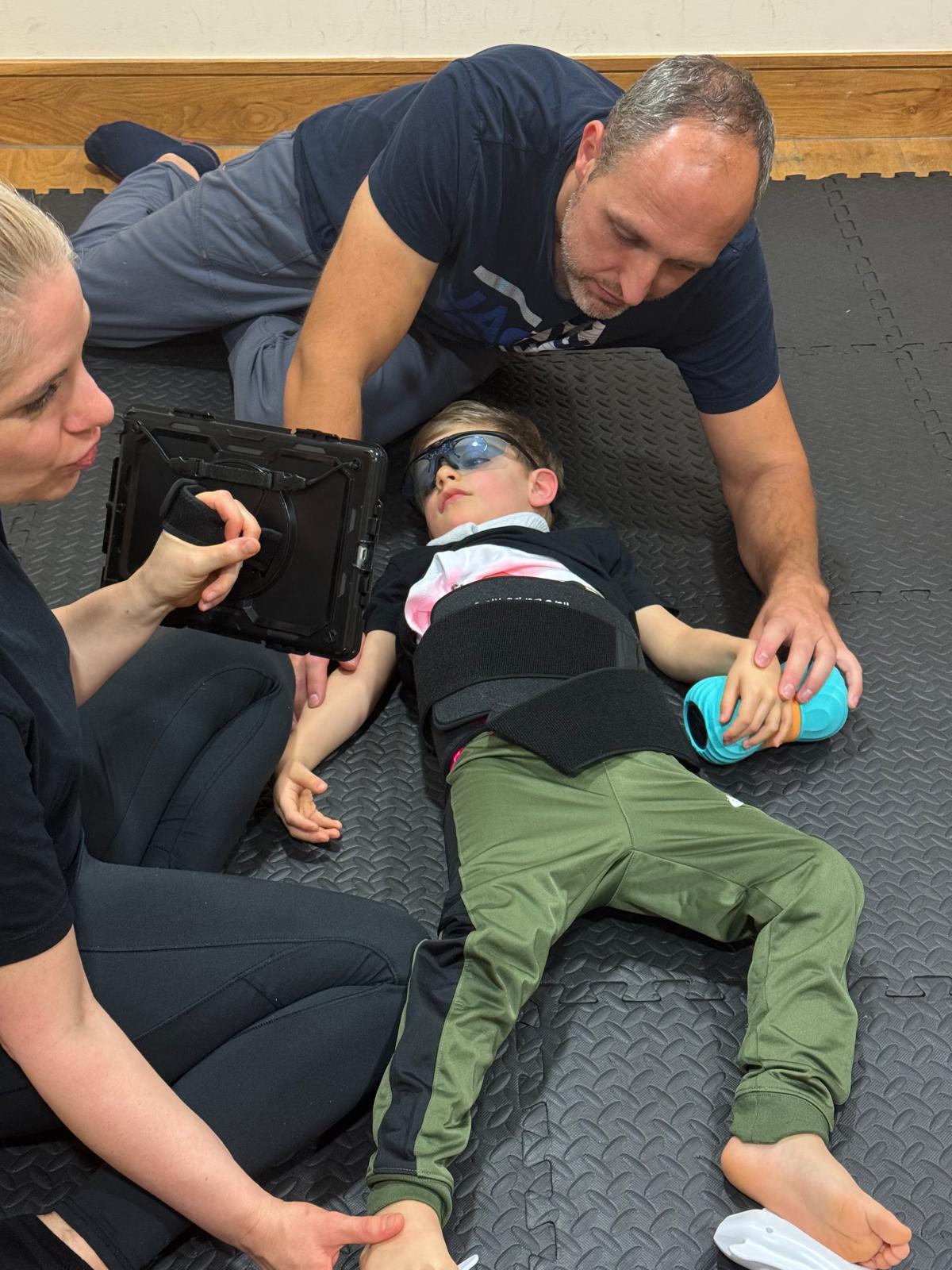
This is where functional neurology comes in alongside the medical picture.
Vagus nerve activation helps the nervous system move out of the alarm state it has been locked into. The vagus nerve is the main pathway between the brain and the body. When it is working properly it signals safety. When it has been compromised by inflammation, the child stays braced and afraid even when the threat has passed.
Primitive reflex integration and coordinated movement work helps rebalance the two hemispheres. During a PANDAS episode one hemisphere often becomes overloaded while the other goes quiet. The brain loses its ability to regulate between states. Movement based work rebuilds that communication.
Cerebellar work is particularly important in PANDAS because the cerebellum is one of the most commonly affected areas. Targeted movement, balance and timing exercises help the cerebellum recover its regulatory function. Parents usually notice emotional stability returning before anything else, because the cerebellum was one of the things driving the instability.
Supporting the gut, lymphatic drainage and breathing patterns also reduces the inflammatory load. These are not separate from the brain. They are part of the same system.
What I Told Her
I told her: this is not your fault and this is not permanent. Your child's brain got caught in the crossfire of an immune response that was doing its job badly. That is not a character problem. It is not a parenting problem. It is a biological event. And biological events can change.
She said: this finally makes sense.
That is the thing about PANDAS. Once you know what it is, everything the parent has been watching makes sense. The suddenness. The intensity. The way it does not respond to normal approaches. It all fits.
If This Sounds Like Your Child
Sudden onset is the key feature. Not a child who has always been anxious but a child who changed. Not gradual drift but a distinct before and after.
If that is what you are describing, ask about PANDAS. If your GP is not familiar with it, ask for a referral to a paediatric immunologist or a PANDAS specialist. The PANDAS UK network is a good starting point for finding practitioners who recognise it.
If you want support for the nervous system piece alongside whatever medical route you take, our Foundation programme gives you a full picture of how your child's brain is organising after the event, where the dysregulation is sitting, and what needs to happen to help it settle.
Your child is not broken. Their brain was overwhelmed. Overwhelmed brains can find their way back. They need the right support in the right order.
