The Cerebellum Masterclass Every Parent of a Developing Child Needs
Discover the part of the brain most often missed in developmental assessments. Learn practical home based exercises grounded in functional neurology that support your child's focus, movement, coordination and emotional regulation, whatever their diagnosis or ability level.
🧠 What you will walk away with:
- ✓ What the cerebellum does and why it is so often overlooked
- ✓ How posture directly affects how your child's brain works
- ✓ The 3 cerebellar zones and what each one controls
- ✓ Practical exercises any child can do at home today
- ✓ Why focus, speech and coordination are all connected
- ✓ Full adaptations for low tone, sensory needs and all abilities
🔁 Instant access · All abilities welcome · Ages 3 to 15
You can see something is hard for your child.
But nobody has told you why.
You have been to the appointments. You have done the therapy. You are doing everything right. But the struggles are still there every day and you wish someone would explain the neurology behind what you are seeing.
- 🎯 Cannot stay focused or on task for more than a few minutes at a time
- ⚖️ Clumsy, unsteady or avoids physical activities because they feel unsafe
- 🗣️ Speech that is delayed, unclear or hard for others to understand
- 😤 Emotional outbursts that seem too big for the situation
- 📝 Handwriting, scissors or fine motor tasks that are genuinely difficult
- 🪑 Slumped posture, low muscle tone or a child who cannot sit still
- 😴 A body that will not wind down at night regardless of what you try
"Most parents we work with have tried everything. What they have never been given is a clear explanation of why their child struggles and a practical plan based on how the brain actually works. That is what this masterclass gives you."
Learn from two people
who have lived this journey
Adi and Dana are not just practitioners. They are parents who navigated the same waiting lists, the same confusing assessments and the same feeling of not knowing what to do next. That experience shapes everything they teach.
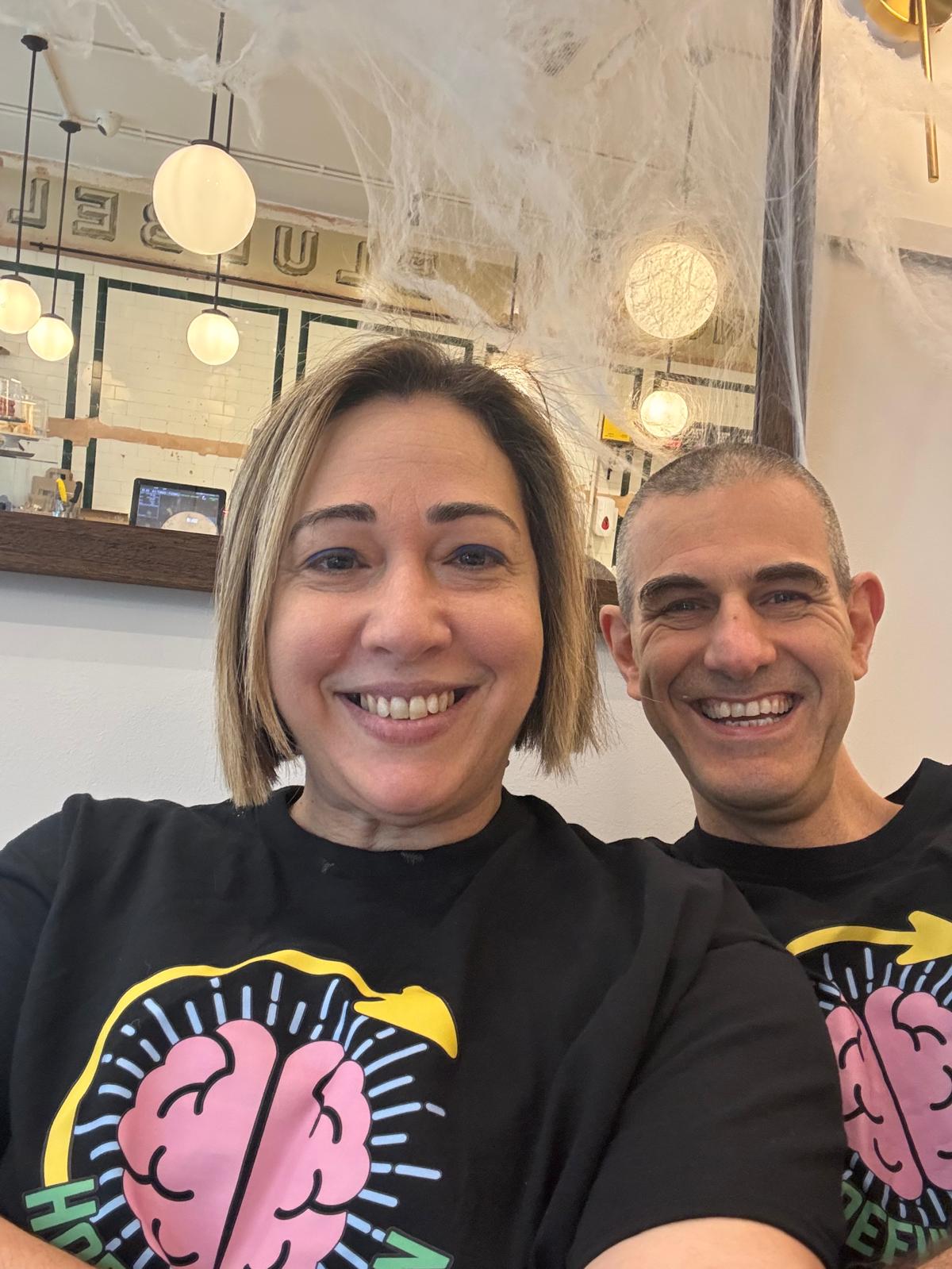
Parents first.
Practitioners second.
When their own son was struggling, Adi and Dana did not accept the standard advice to wait and see. They researched, trained and built a practical system grounded in functional neurology and the Melillo Method that produced real, visible change at home.
Today they have supported hundreds of families across the UK and internationally. Their approach works precisely because it starts with parents, not clinicians. No specialist equipment. No overwhelming protocols. Just clear exercises you can weave into daily life from this week.
A small structure with an enormous role in your child's development
brain volume
brain neurons
🧠 Why the cerebellum is the key to your child's development
The cerebellum sits at the back of the brain. Despite being just 10% of total brain volume it contains more than half of all its neurons. Functional neurology research shows it plays a critical role far beyond motor control. It regulates posture, sensory processing, attention, emotional tone, language and executive function.
Children with autism, ADHD, dyspraxia, dyslexia, sensory processing differences or developmental delays very commonly show signs of cerebellar underactivation. This is not something most professionals routinely assess or address. The good news: the cerebellum responds very strongly to targeted movement, posture work and balance exercises. It can be supported and trained at home, by you, starting this week.
This masterclass shows you exactly how to do that.
The three zones of the
cerebellum
Each zone has a distinct job. When you understand which zone your child needs most support with you can choose the right exercises rather than trying everything and hoping something works.
Balance and Spatial Awareness
Controls balance, eye and head coordination and your child's sense of where their body is in space. When this zone is underactive children feel unsteady, avoid physical play and may struggle with reading because their eyes cannot track smoothly across a page.
Posture and Motor Coordination
Regulates posture, core strength, muscle tone and smooth coordinated movement. Children with low tone who slouch constantly, have a clumsy walking pattern, struggle with handwriting or cannot sit upright in a chair often have reduced function in this zone.
Focus, Language and Emotions
Coordinates higher cognitive functions including planning, attention, language processing and emotional regulation. This zone is most relevant to children with ADHD, speech delays and big emotional reactions. It responds very well to rhythm and dual task activities.
What you will discover
A practical masterclass designed for parents who want to understand the neurology behind their child's challenges and leave with tools they can actually use. No jargon. No overwhelm.
The Cerebellum Explained for Parents
A clear visual explanation of what the cerebellum does, why it matters so much for development and why it is rarely addressed in standard appointments or assessments.
Why Posture Is a Brain Issue, Not a Behaviour One
How the way your child holds their body directly affects how their brain receives and processes information, and what you can do about it at home starting tonight.
How to Identify Which Zone Your Child Needs
A simple observation framework to work out which cerebellar zone is most underactive in your child, so exercises are targeted rather than guesswork.
Practical Exercises for Every Child and Every Ability
Video demonstrations of real movement activities adaptable for children with low tone, sensory sensitivities, non verbal children and all developmental stages.
How Movement Builds Focus and Learning
The direct pathway from cerebellar exercise to improved attention and working memory, explained in a way you will remember and be able to share with teachers and therapists.
The Link Between Movement, Speech and Timing
Why the cerebellum is central to language development and how rhythm based exercises at home can support clearer speech and better communication at any age.
A taste of what
you will take home
Every exercise is rooted in functional neurology and targets a specific cerebellar zone. All are demonstrated live with full adaptations for children who need more support.
Single Leg Balance Progressions
A graded series of balancing exercises that directly activate the vestibulocerebellum. Adi and Dana show how to start from the simplest version and build up gradually, including floor based options for children who are not yet stable standing independently.
🌀 VestibulocerebellumCross Lateral Crawling and Floor Patterns
Cross body coordination movements that strengthen the connection between brain hemispheres and build core stability. Shown with seated and supported versions for children who find floor work difficult or tiring, including those with low tone.
💪 SpinocerebellumRhythm and Beat Synchronisation
Clapping patterns and beat based activities that activate the cerebrocerebellum and build the timing, attention and working memory pathways. Genuinely enjoyable for children and takes under five minutes a day to begin seeing results.
🧠 CerebrocerebellumPostural Tone and Core Activation
Gentle progressive exercises to activate the deep postural muscles that underpin attention and sitting readiness. Particularly useful for children who cannot maintain an upright seated position for more than a few minutes at school or at the table.
💪 SpinocerebellumEye Tracking and Gaze Stability Drills
Simple visual exercises that train smooth eye tracking and stable gaze. Essential for reading, reducing sensory overwhelm in busy classrooms and improving spatial processing. Shown with seated adaptations for every ability level.
🌀 VestibulocerebellumDual Task Movement and Thinking Activities
Activities that combine a simple physical movement with a thinking task, targeting the cerebrocerebellum's role in executive function and planning. Children genuinely enjoy the challenge and parents are consistently surprised how quickly attention improves.
🧠 CerebrocerebellumEvery exercise is demonstrated live with full modifications for children at all developmental stages and ability levels
For parents of children who…
With or without a diagnosis. Whether you are on a waiting list, working with a therapist or simply know your child needs more support. The exercises adapt to your child, not the other way round.
"If this sounds like your child, the cerebellum is the missing conversation and this masterclass is your starting point."
Get Instant Access $33 →What families are saying
"By day seven of doing the exercises at home my son was noticeably calmer and more connected. He started initiating play with his sister for the first time. I genuinely could not believe it was that simple."
"I expected this kind of change would take months of specialist therapy. The posture and balance exercises made a visible difference in two weeks. Adi and Dana explain the science so clearly that I finally understood what I was actually doing and why."
"Our son handled a routine change calmly for the first time ever after we started the cerebellar exercises. For our family that was extraordinary. The neurological explanation finally made everything make sense."
Clarity, confidence
and a real plan
Most parents of children with developmental challenges have tried many things without ever being given a neurological framework to understand why their child struggles and what to do about it at home. This masterclass changes that.
- ✓A clear understanding of the cerebellum and which of the three zones your child most likely needs support with right now
- ✓Specific exercises you can start the same evening with no equipment and no prior training required
- ✓The ability to observe your child and understand whether they need balance, coordination or cognitive cerebellar support today
- ✓Full adaptations for children at all ability levels including non verbal children, those with low tone and children with sensory sensitivities
- ✓A simple daily routine of around 10 minutes that fits into morning, after school or bedtime without adding to your stress
- ✓The confidence to understand your child's brain and explain it clearly to teachers, therapists and other professionals you work with
- ✓A sense of genuine hope grounded in neuroscience, because the cerebellum is one of the most changeable parts of the brain at any age
Meet Adi & Dana
Two certified practitioners who have supported hundreds of families across the UK and internationally. And two parents who have been exactly where you are right now.
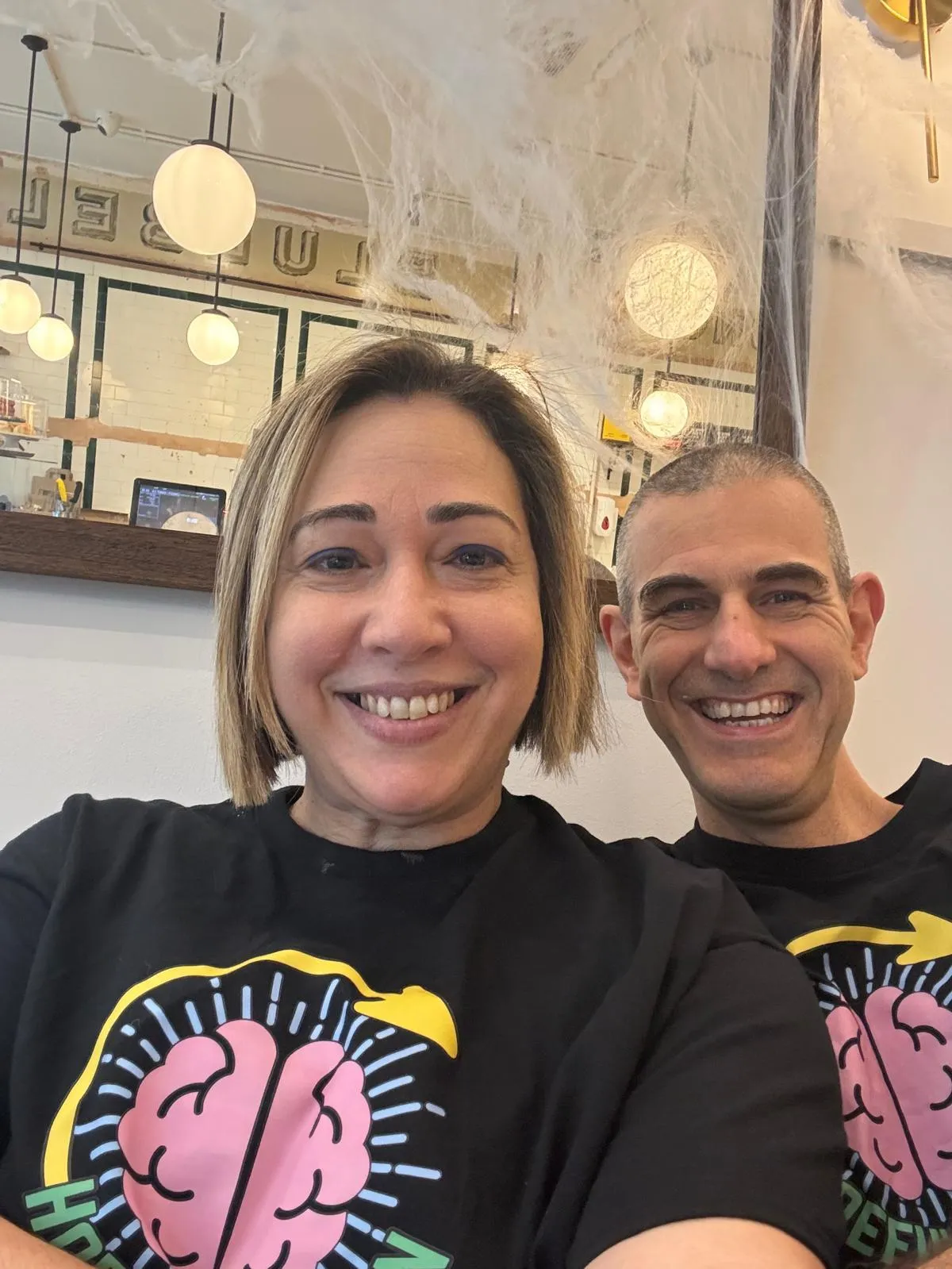
Adi is a Melillo Method certified practitioner and posturologist with specialist expertise in primitive reflex integration, functional neurology and cerebellar rehabilitation. His clinical work is grounded in lived experience as a parent who navigated the same system you are in. He translates complex neuroscience into practical daily routines that families can actually sustain.
Dana is a certified nervous system and neurodevelopmental practitioner with over 20 years of experience supporting children with diverse learning profiles. Her journey began at home with her own son and that experience shapes everything she teaches. Her style is warm, clear and deeply practical. Parents consistently say she makes complex neuroscience feel accessible and immediately usable.
Everything you need.
Nothing you do not.
60 Minute Recorded Masterclass
With Adi and Dana. Watch anytime, right after checkout.
Instant Access
Watch anytime and revisit the exercises whenever you want to refresh your understanding or try a different cerebellar zone.
Parent Friendly Neuroscience
Functional neurology explained in plain language you will actually remember and feel confident sharing with your child's school or therapy team.
Exercise Demonstrations
Every exercise shown on screen with clear step by step guidance and full adaptations for children at different developmental stages and ability levels.
Zone Identification Framework
A simple set of observations that help you identify which cerebellar zone your child needs most so every minute of practice is working in the right direction.
Recording Link Sent Immediately
Delivered straight to your inbox after payment, so you can start watching the moment you're ready.
Questions parents ask us
The cerebellum sits at the back of the brain and, despite being small, contains over 50% of the brain's total neurons. Functional neurology research shows it plays a critical role far beyond movement. It regulates balance, posture, coordination, attention, emotional regulation and even language. Children with autism, ADHD, dyslexia, dyspraxia and sensory challenges very commonly show signs of cerebellar underactivation. The important news is that it responds very well to targeted movement and posture exercises, which means it can be supported at home starting now.
Yes. This masterclass is specifically designed with the full range of developmental needs in mind. Adi and Dana will demonstrate adaptations for children with low muscle tone, sensory sensitivities, non verbal children and those at varying developmental stages. The neurological principles apply regardless of diagnosis or ability level and every exercise has a starting point that any child can access, including children who are not yet walking independently or who need physical support throughout.
None at all. This masterclass is designed for parents with no background in neuroscience or therapy. Every exercise requires nothing more than a clear floor space and sometimes a wall for support. Everything is demonstrated clearly and explained in plain language. You will leave knowing exactly what to do and why you are doing it.
Highly relevant. Children with autism and ADHD frequently show cerebellar underactivation across all three zones. The vestibulocerebellum affects their spatial awareness and sensory processing. The spinocerebellum affects their posture, muscle tone and physical coordination. The cerebrocerebellum affects their attention, language timing and emotional regulation. This masterclass gives you a neurological framework for understanding exactly what is happening and practical exercises that address each zone directly.
Absolutely and we encourage it. Cerebellar exercises complement occupational therapy, speech and language therapy, physiotherapy and other neurodevelopmental approaches. Many families find that cerebellar work enhances the effectiveness of their existing therapy because it improves the brain's overall capacity to respond and learn. We always recommend sharing what you are doing with your child's therapy team so everyone is working in the same direction.
The vagus nerve masterclass focused on calming and regulating the nervous system using acupressure and breathing techniques. This cerebellum masterclass is about activating and building the brain's coordination centre through posture, movement and balance work. They address different systems but complement each other beautifully. The vagus nerve work helps the nervous system feel safe. The cerebellar work builds the underlying neural architecture for focus, movement and learning. Many families use both together with strong results.
It's a recording. There's no live date and no Zoom call to join. You pay once, the link lands in your inbox right away, and you watch whenever suits you.
Stop waiting for answers.
Start supporting your child's brain
with confidence.
Watch Adi and Dana walk you through it. You will understand your child's brain at a deeper level than ever before and leave with exercises you can start that same evening.
Because movement is not just exercise. Movement is brain development.