Intensive Therapy for Autism and ADHD in Children | Hopeful Neuron | London and UK
Intensive Therapy for Autism and ADHD — London and UK

If you're considering this, it's probably because you've already tried things. And they haven't worked the way you hoped. You're not here because you gave up easily. You're here because you're still looking.

Your child is not broken.
Their nervous system needs support.

Intensive therapy for autism and ADHD — London clinic and online across the UK

Most approaches focus on managing the symptoms. Our intensive therapy programme for children with autism, ADHD, sensory processing difficulties and learning challenges works at the nervous system level that everything else builds on. Mill Hill, London and available online worldwide. No diagnosis needed. No waiting list.

200+ Families helped
5 Parent reviews
WW Remote worldwide
★★★★★

"Dana and Adi are a great team, incredibly knowledgeable and supportive."

Faranak B., London
Intensive Therapy Programme — London and UK

What Is an Intensive Therapy Programme
for Autism and ADHD?

This is not just more therapy hours. It's a structured, UK-based intensive therapy programme for children with autism, ADHD, sensory processing difficulties and learning challenges — delivered in our Mill Hill London clinic or online for families across the UK. Instead of weekly sessions with painfully slow steps, the intensive format gives the nervous system the concentrated input it needs to actually shift. We work with your child across the week, then work with you on how to keep the progress going at home.

Intensive Programme
£3,000
What is included
  • A full assessment of your child's nervous system, primitive reflexes and brain-body connection before we start anything
  • A personalised programme built specifically around your child — not a generic plan pulled from a template
  • Intensive in-clinic sessions across the week with Adi and Dana, both Melillo Method certified
  • A clear home plan so you know exactly what to do after the week ends, with ongoing parent support included
Why this is different

Most parents come to us after trying multiple therapies. OT, SALT, play therapy, sensory diets. Things that helped a little, or not at all. The reason those approaches often plateau is that they work on the outputs. We work on the inputs — the nervous system layer that everything else depends on.

The usual path
  • Months on NHS waiting lists
  • Weekly sessions, slow progress
  • Managing symptoms, not causes
  • Left guessing what to do at home
With us
  • Start this week, no referral needed
  • We look at why, not just what
  • Changes families actually feel
  • You leave knowing what to do — and why it's working
Find out if this is the right next step for us

Book a free 15-minute call with Adi or Dana. Tell us what's going on with your child. We'll be straight with you about whether this programme makes sense for your family right now.

✓ No diagnosis required ✓ London clinic and online ✓ 200+ families helped
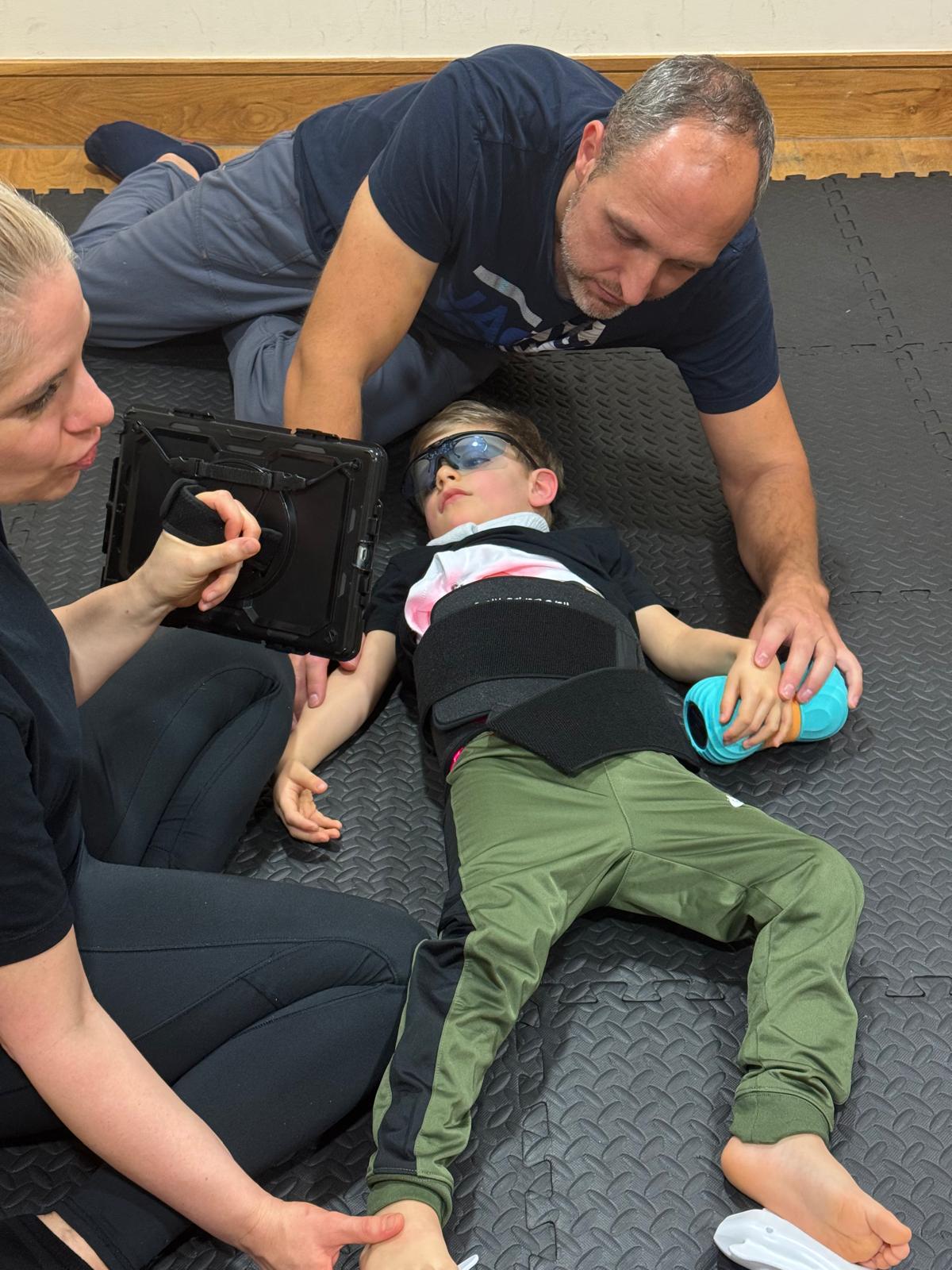
Child in a Hopeful Neuron session
Who This Programme Is For

Is This Intensive Therapy Right
for Your Child?

You don't need a diagnosis to get started. A lot of families come to us while still on an NHS waiting list, or because they know something isn't right but nobody has been able to explain exactly what. If your child is struggling day to day, that's enough reason to reach out.

Cannot sit still or stay focused long enough to get through a lesson, a meal or a homework task
Reactions that seem out of proportion. Meltdowns that come from nowhere and take a long time to come down from
Struggles to say what they need or how they feel. Speech that's there one moment and gone under pressure
Reading, writing or maths that takes far more effort than it should. Clearly capable but can't show it on paper
Overwhelmed by sounds, textures, clothing labels, certain foods — things other children barely notice
Clumsy, unsteady, poor balance. Falls over more than other children. Avoids sport or anything physical
Getting dressed, leaving the house, switching activities. All of it feels like a battle every single day

If any of that sounds familiar, you're in the right place. This programme was built for your child — and for you as the parent carrying this too.

Talk to us about your child
Why Intensive Therapy Works When Others Have Not

Why does intensive therapy work
when other therapies have plateaued?

This is the question most parents arrive with. They've tried occupational therapy, speech therapy, sensory diets, weekly behaviour sessions. Sometimes things improved for a while. Then plateaued. The reason is not that those approaches are wrong — it's that they target the outputs: the behaviours, the skills, the symptoms. Without ever addressing what's driving them underneath. That's what intensive neurodevelopmental therapy does differently.

OT or SALT that helped a little but plateaued
Because working on motor skills or speech in isolation doesn't address why those things are hard in the first place.
Sensory strategies that work inconsistently
Because a sensory diet manages the overload. It doesn't change the nervous system's threshold for getting there.
Months on a waiting list, watching your child struggle
The NHS waitlist for an assessment can run to two or three years. Your child can't wait that long to get support.
Reports with recommendations and no real plan
Told what your child has. Not shown what to actually do about it or how to make progress at home every day.

We use the Melillo Method, which works at the level of the nervous system and primitive reflex integration. This is why children who've been through years of weekly therapy can start to shift meaningfully inside one intensive week. It is a different starting point — not just more of the same.

Results Parents See

What changes after an intensive therapy programme?

Not vague improvements. Specific changes parents notice in real life. Here's what families consistently describe in the weeks following the programme.

Better focus and attention

This looks like: finishing homework without a meltdown

Targeted work on the brain-body foundations behind attention so your child can stay on task, follow instructions without constant reminders and feel less overwhelmed by school.

Reading, writing and maths feel easier

This looks like: keeping their place on the page

Working on the processing, sequencing and memory foundations that underpin learning — not just practising the skills but building the platform they sit on.

Clearer speech and communication

This looks like: saying what they need when they need it

Supporting the nervous system regulation that speech depends on. Children who communicate more clearly when calm often need help building that calm foundation first.

Fewer meltdowns and big emotions

Parents often tell us the house is quieter by 6pm — not because their child is suppressing anything, but because they're genuinely less overwhelmed. Building regulation capacity so your child can handle frustration, transitions and sensory input without escalating. A nervous system that recovers faster, not one that just holds it together until they get home.

Sensory processing becomes manageable

The school jumper. The sock seam. Certain foods. Right now these can derail a whole morning. We work on reducing the nervous system's sensitivity so the things that currently cause shutdowns gradually stop hitting so hard. It doesn't happen overnight, but parents are often surprised by how quickly some of these start to shift.

Better coordination and body confidence

Working on movement, balance and body awareness foundations. There's something that happens when a child starts to feel more physically capable — the confidence tends to spread. Children who hang back in PE, who avoid playgrounds, who find their body unreliable — they often start joining in once this piece shifts.

More independence every day

The goal: a child who manages more of their own day

Building the self-regulation and processing capacity that underpins independence. Getting dressed, packing a bag, moving between tasks without a battle — these aren't things to nag about. They're things to build the foundations for.

Mornings and transitions feel manageable

Mornings are hard because switching states is hard. It's not defiance, it's dysregulation — and it's one of the first things parents notice improving. Helping children build the flexibility to handle change means leaving the house stops being the thing the whole family dreads.
How Our Intensive Therapy Works

How the programme
actually works

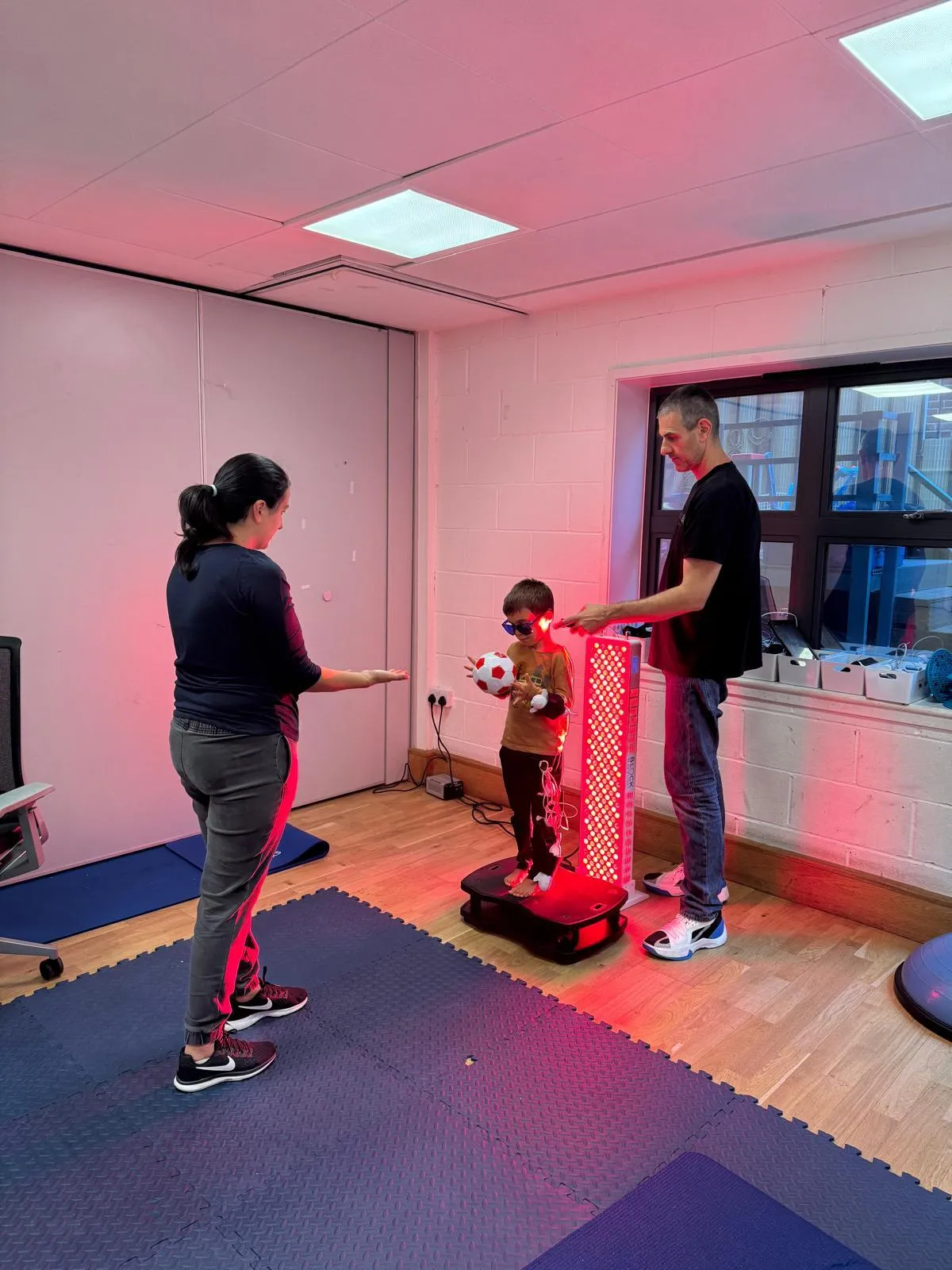
We don't have a standard programme we run every child through. We start with a full assessment, then build the week around what we find. Every session is structured and warm. Children notice they're making progress. That matters as much as the progress itself.

01
Hands-on, in the room with your child
Not worksheets. Not screen time. Real, physical, guided work that meets your child exactly where they are right now and builds from there.
02
You are part of this, not just watching
Parent coaching is built into the programme. You leave the week knowing what to do at home and why it matters — not just hoping the progress holds.
03
Your child feels it working
We build sessions around things children can genuinely succeed at. When a child starts to feel capable in the room, that carries over.
04
Nothing is looked at in isolation
Posture. Movement. Reflex integration. Emotional regulation. Sensory processing. These don't exist in separate boxes — they all affect each other, and we treat them that way.
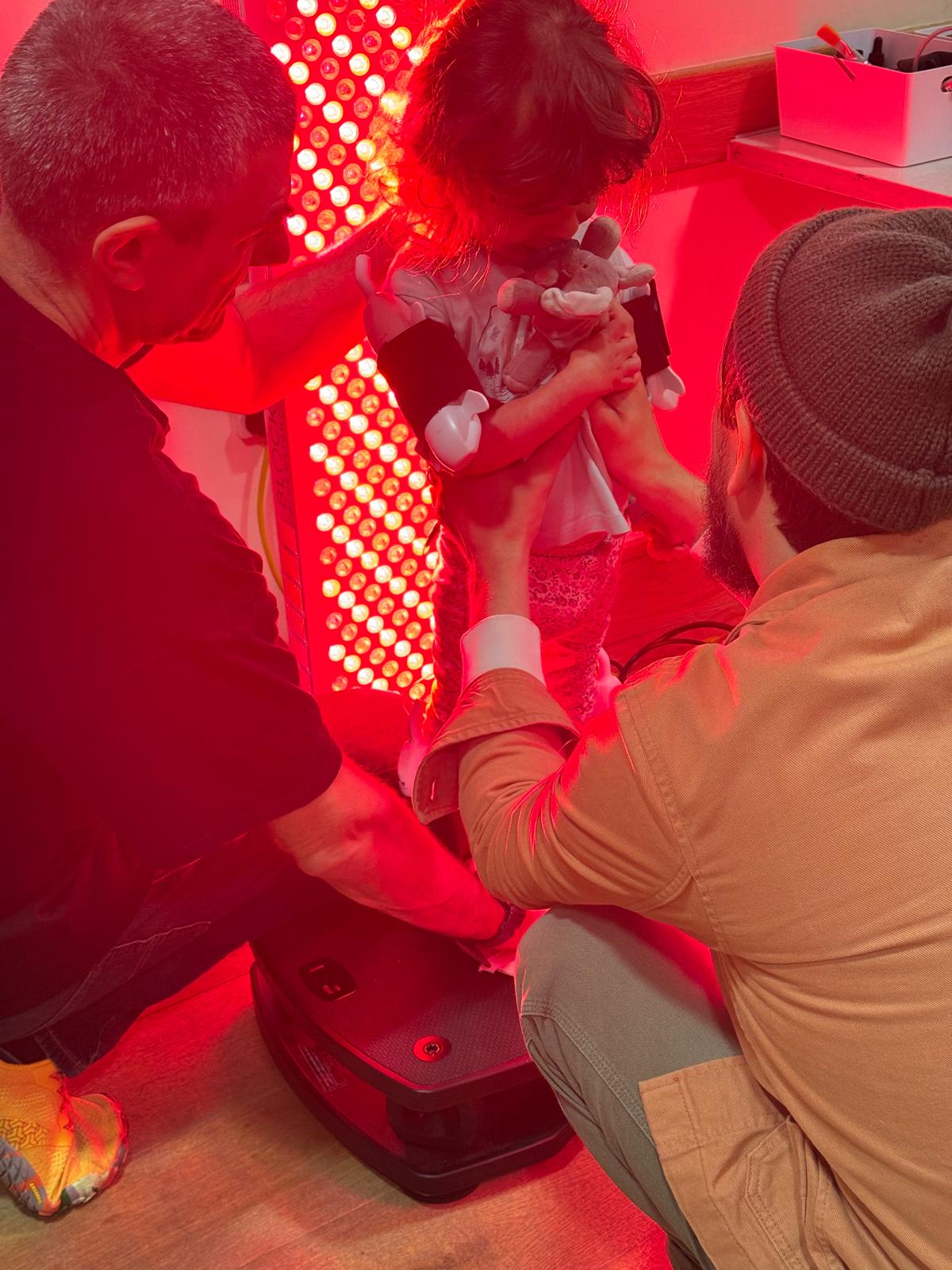
Hopeful Neuron intensive therapy session in London
What Parents Gain

You are carrying a lot. We know.

Parenting a child who is struggling is exhausting in a way that's hard to explain to people who haven't been through it. The constant googling at midnight. The appointments that go nowhere. The guilt about whether you're doing enough. This programme is for you too — not just your child.

01
You know what to do and why
No more guessing, no more googling at midnight. You leave the week with a clear plan, a reason behind every part of it, and someone to call if you get stuck.
02
Mornings, homework and bedtime get easier
The flashpoints that currently drain everyone in the house start to shift — not because your child is suddenly different but because you're working with their nervous system instead of against it.
03
You can handle the hard days without losing yourself
Understanding why your child responds the way they do changes how you respond. That's not just good for them. It's good for you.
04
A house that actually feels like it's moving forward
Less tension. More connection. Not every day. But enough days that it starts to feel different.
Talk to us about your family
Family after Hopeful Neuron programme
What Parents Say

In their own words.
Not ours.

★★★★★
"After an intensive week of functional therapy with Dana and Adi, and implementing everything we learned at home, we saw improvement in our son's behaviour. He is calmer now, his focus has improved, he's exploring everything around the house which he wasn't doing before, and his sleep has improved."
N
London · Son aged 4, autism
★★★★★
"Very caring and truly have your best interests at heart. Check-ins from Dana help to keep you focused with working on programmes at home and they are always there with support and any extra questions. Highly recommend."
H
UK
Why Neurodevelopmental Intensive Therapy Works

The science behind our
intensive therapy approach

Our intensive therapy programme is built on the Melillo Method and posturology — two evidence-informed approaches to neurodevelopmental therapy that work at the level of primitive reflex integration, brain hemisphere balance and nervous system regulation.

Primitive reflexes that were never properly integrated can show up as poor coordination, constant fidgeting or difficulty staying seated. These are not character flaws or laziness. They are nervous system patterns that neurodevelopmental therapy can change.

But the real reason parents trust us with their child is simpler than the method. We are parents of children who struggled. We know what the waiting feels like. Read about Adi and Dana and why we started Hopeful Neuron.

Want to understand the approach before you commit to anything? Watch our free guide on primitive reflex integration.

200+
Families supported
5★
Parent reviews
4–8
Weeks to early results
100%
Personalised plans
Adi and Dana from Hopeful Neuron
Common Questions

Questions parents ask before
starting intensive therapy

We get it. You want to make sure this is the right thing before you pick up the phone. Here are the questions we hear most often.

No. A lot of families come to us mid-assessment, or while sitting on a two-year NHS waiting list. If you're worried about your child, that's reason enough to reach out.

We work with children from around age 3 through to teenagers. The honest answer is that the approach looks quite different for a 4-year-old versus a 14-year-old — the underlying nervous system work is similar, but how we do it in the room, what we ask of the child, and what we ask of the parent changes a lot. We also have a specific strand for older students dealing with concentration and learning pressure around exams, which is its own thing really.

Yes, absolutely. Many of our families have never been to the Mill Hill clinic. The remote programme is the full thing — not a watered-down version of it.

It varies, and we'd rather be honest about that than give you a number that sounds good. Most parents notice something — usually around focus, following instructions or emotional regulation — within the first week. The deeper changes build over the weeks that follow as your child practises the home programme. Some families see dramatic shifts quickly. Others see steadier, more gradual progress. We'll tell you what we genuinely expect for your child once we've done the initial assessment.

The week is the beginning, not the end. You leave with a personalised home programme and ongoing coaching so you're not handed a folder and left to work it out on your own.

We're not a replacement for OT or SALT, and we'd never say that. Both are valuable and a lot of our families use them alongside us. The difference is the starting point — OT works on what the child can do with their body, SALT works on language and communication. We work on why those things are hard at the nervous system level. A lot of families find that doing our programme accelerates the progress they're already making in OT or SALT, because the underlying foundations shift.

The intensive itself runs across five to seven days, depending on your child. After that, the home programme and parent coaching continues — that ongoing piece is where a lot of the consolidation happens.

Yes. Our approach doesn't depend on verbal communication — we work with children across the full autism spectrum, including non-verbal children. Everything is adapted to your child's level and the way they actually communicate.

Yes — and that's not optional, it's core to how we work. You're not dropping your child off and hoping for the best. Parent coaching is woven into the programme from day one, because the home environment is where most of the real consolidation happens. We need you to understand what we're doing and why, not just to observe it.

Yes, and it's something we address fairly often. Low muscle tone tends to improve alongside focus, coordination and emotional regulation as the nervous system foundations develop — they're more connected than most people realise.

Start Intensive Therapy for Autism or ADHD

Still not sure if this is right?
Let's talk it through.

Book a free 15-minute call with Adi or Dana. Tell us what's going on. We'll ask a few questions, be straight with you about what we think, and tell you honestly whether this programme makes sense for your family right now. No pressure either way. We're based in Mill Hill, London and work with families across the UK and worldwide online.

1A Hall Lane, Mill Hill, London NW4 4TJ  ·  Remote support worldwide  ·  Mon–Sat 9am–2pm