Calmer, more settled
Some parents notice fewer big emotional reactions and a child who seems safer in their own body.
We know you have questions before you take the next step. That is completely normal. Here are the things parents ask us most, answered clearly and honestly, including what we can't promise. If yours isn't here, just ask us.
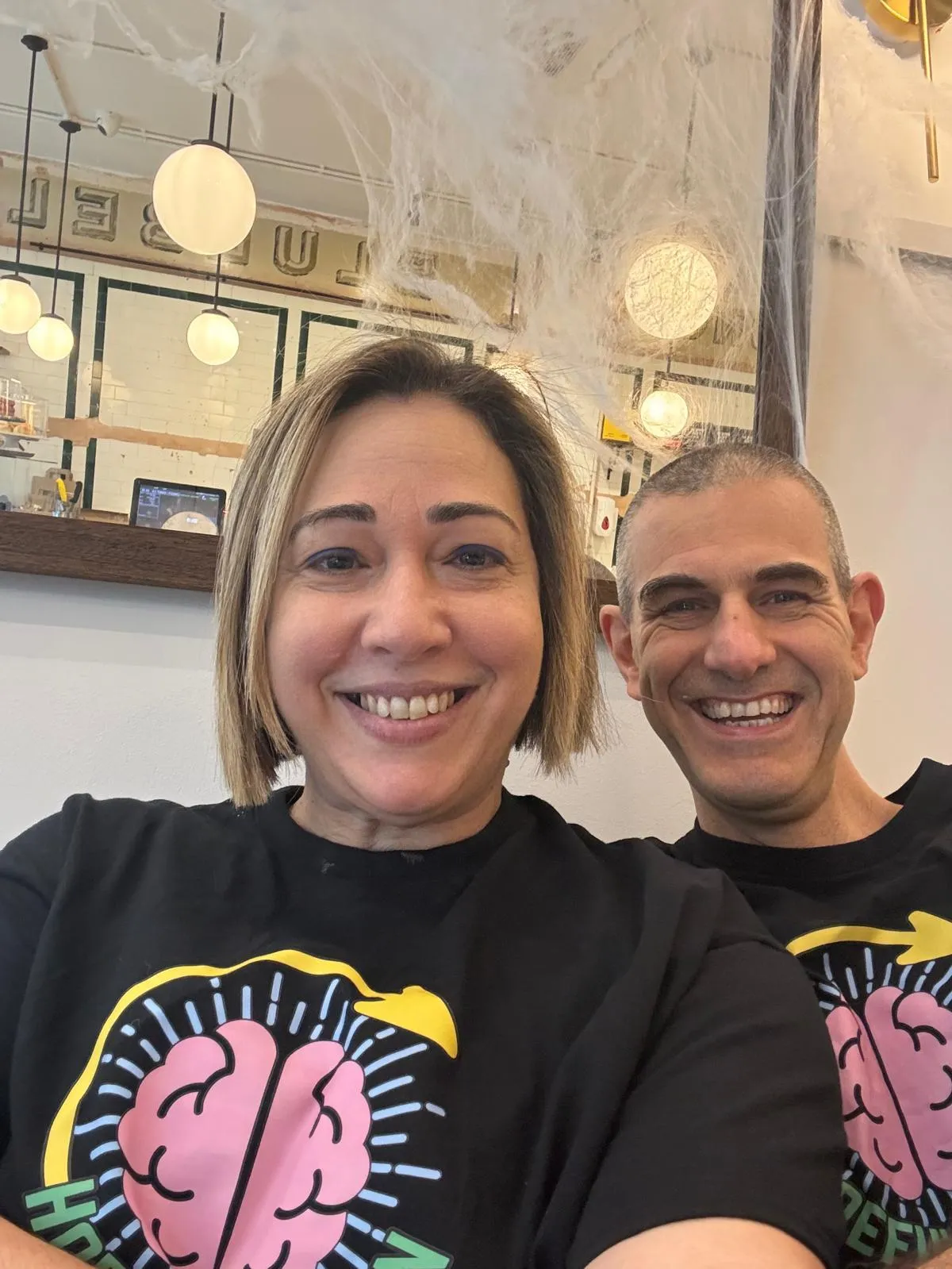
Help the nervous system feel safe, so your child isn't stuck in fight, flight or shutdown.
Build balance, coordination and body awareness, the physical foundation the brain relies on.
Gently help early automatic reflexes finish switching off, so they stop getting in the way.
Focus, language and independence get a steadier base to build on.
This is our working model, not an established sequence. The questions below go into more detail, including the evidence.
No. Your child does not need a formal autism or ADHD diagnosis to work with us, and you don't need to be on any particular waiting list either.
Many of the families we work with are midway through the NHS pathway, or simply concerned about what they're seeing at home and at school. If you're worried about focus, meltdowns, sleep, sensory difficulties, communication or learning, that is enough reason to reach out. We don't diagnose, so if you'd like a diagnosis it still comes from the NHS or a private specialist team.
We work with children from around age 3 through to teenagers. We adapt what we do to each child's age, developmental stage and needs.
For older students, we also offer a GCSE Exam Boost programme for teens who are finding focus, learning, memory and exam pressure particularly hard.
The first step is a free 15 minute call with Adi or Dana. No pressure, no jargon. You tell us about your child and what you're seeing at home. We listen carefully and tell you honestly whether we think we can help, and how.
There's no obligation to go any further. Some parents tell us the call was useful in itself, just having someone listen and give honest guidance. You can book at hopefulneuron.com/calendar.
Yes. Being on a waiting list doesn't mean you have to wait to try something. Many families work with us while they're waiting.
We work alongside NHS services, speech and language therapy (SALT), occupational therapy and any other support your child already has. We are not a replacement for those services. We're an additional layer of support that looks at the nervous system. Please keep your child's appointments, and keep your GP in the picture.
Yes. We regularly work with children who are sensory sensitive, resistant to new experiences or who find it hard to engage with unfamiliar adults. We know how to go slowly.
Everything is done at your child's pace, and parents stay involved throughout so it feels safe and supported. We never force participation. Some children who were very resistant at first settle more than their parents expected, though every child is different.
There's a range of ways to start, and each page explains what's included:
If you're not sure which fits, the free call is the place to start.
Our in person intensive programme takes place at our clinic in Mill Hill, North West London (NW4 4TJ). Families travel to us from across London and beyond for the intensive week.
We also run remote programmes for families who can't travel. They follow the same structure we use in clinic, delivered over video, and some things are harder to check remotely. See the Remote Programme.
Before the week begins, we look carefully at your child's nervous system, primitive reflexes, posture and balance, so we can decide where to focus.
During the week, your child takes part in gentle, structured movement activities aimed at supporting the nervous system, including work on primitive reflexes. Sessions are adapted to your child, and nothing is forced.
We also spend significant time with parents, so you understand everything and feel confident with the home programme that follows. You leaving with a clear plan you can use is as important to us as the sessions themselves.
Primitive reflexes are early movement patterns that every baby is born with. They help organise the brain and body in the first months of life, and they usually fade as the nervous system matures.
Some practitioners, including us, believe that when they don't fully fade, they can interfere with attention, emotional regulation, posture, coordination and learning. This is debated, and other explanations for those difficulties are far more common. In the model we work with, gentle, targeted movement exercises may support the nervous system to complete the process.
You can read more in our guide to primitive reflexes.
The Melillo Method was developed by Dr Robert Melillo, who has written several books on why children with autism, ADHD and learning difficulties struggle, and on what may help.
It's based on the theory that many neurodevelopmental difficulties involve differences in how the two sides of the brain develop, together with an immature or dysregulated nervous system. This theory isn't widely accepted in mainstream neuroscience, and research on the method is limited. We use it as a framework for deciding what to look at and which home exercises to give.
Adi and Dana are Melillo Method certified practitioners. Read more about the Melillo Method in the UK.
Yes. The Intensive Programme includes three months of follow up support at no additional cost. That includes check in calls to track your child's progress and to make sure you feel confident with the home programme.
You can also reach us between calls when things come up, rather than waiting for the next one. Parents tell us this ongoing support makes a big difference. You're not left to figure it out alone.
Occupational therapy (OT) and speech and language therapy (SALT) are valuable, and we are not a replacement for them. Many of our families use Hopeful Neuron alongside those services.
The difference is mainly in focus. Rather than working on a specific skill or behaviour, we look at the nervous system and movement foundations that we think can make those skills harder to develop. That is our view, and it isn't established. Please keep any therapy your child already has.
Research on the Melillo Method and on reflex based approaches is limited and mixed, and much of it comes from people connected to the method. The evidence for the other tools we use ranges from mixed to very limited. None of them is an established treatment for ADHD or autism, and none is part of standard NHS care.
We can't promise results, and we'd rather you knew that before you start. See our page on the science behind what we do for an honest summary of the evidence for each tool.
No. We're Melillo Method certified practitioners, not medical doctors, and Melillo Method certification isn't a regulated healthcare qualification. We don't diagnose or treat medical conditions, and we can't give medical advice.
You can read more about our training on our About page.
If you're worried about your child's development, behaviour, sleep or wellbeing, yes. Your GP or health visitor can look at the whole picture, check for other causes and refer you where needed. What we do is designed to sit alongside medical care, not replace it.
Yes. Many families we support also use medication, and our programme is designed to run alongside it. We don't advise on medication, and that decision always stays with your prescriber. Please don't stop or change medication without talking to them first.
We introduce each tool gently, explain it to you first and go at your child's pace, and you can stop or skip anything at any point. They aren't suitable for every child. Please tell us in advance about epilepsy or a history of seizures, photosensitivity, any medical conditions, medication, and any implanted medical devices, so we can plan around them. If you have concerns, check with your child's doctor first.
Every child is different, so we won't give you a number we can't stand behind. Some families notice early changes within weeks to a couple of months, often in sleep, emotional regulation and daily behaviour. Others notice little.
Changes in learning, communication and confidence, where they happen, tend to build over several months of consistent home practice. We track progress with you throughout, so you always know how your child is responding and what to look for next.
Every child is different. Some families tell us about better sleep, fewer meltdowns, smoother mornings, clearer communication or steadier focus at school. We've listed them in the "What some families notice" section further down this page, and they are not promises.
Some parents also tell us they notice changes in themselves. When a child settles, the whole family can settle.
We design the home programme to fit into real family life, not add to your stress. Most programmes take around 15 to 20 minutes a day, sometimes split across two short sessions.
The exercises are simple, and your child doesn't need special equipment for most of them. We show you everything and walk you through it so you feel confident before you start. If anything feels unclear, we're here to help.
We hear this a lot. Many of the families who come to us have tried strategies, therapies and programmes before and feel exhausted and disheartened. That is completely understandable.
What's different is where we start. Most approaches focus on specific behaviours or skills. We start by looking at the nervous system and movement, because we think that may be part of why those things are hard. We can't promise it will make the difference you're hoping for.
We'll always be straight with you about what we think is going on and what we think we can help with. If we think something else would serve your child better, we'll tell you.
Yes. We support families worldwide through our remote programmes. The initial look at your child is done by video, we build a personalised plan, and the exercises are delivered so they work at home.
Some things we would check by hand in clinic are harder to see over video. If we think an in person visit would help, we'll say so.
We start with a remote look at your child over video, where we observe their movement, posture and responses. From there we build a personalised programme for them.
We walk you through every exercise with clear video demonstrations so you can do them confidently at home. Regular check in calls track progress and the programme is updated as your child develops, and you can reach us between calls.
We can't say that it is. The most important part of both is the home plan that parents carry out every day, and that is the same whether it was designed in clinic or remotely. But some things are easier to check in person, and we can't promise the same results.
Many families do well with the remote programme. If you're unsure, the free call is a good place to talk it through.
Many children with autism or ADHD aren't struggling at school because they aren't trying. In the model we work with, the nervous system may be working in a constant state of stress, and when the brain is busy managing sensory overwhelm it can be harder to sit still, stay on task and filter out distractions.
Our programme includes movement activities aimed at supporting regulation. Some parents notice better focus or fewer meltdowns after school. We can't promise this, and we'd encourage you to work with your child's school and SENCO as well.
Speech relies on posture, breath control, coordination, balance and regulation all working together, so if a child's body is working hard just to stay regulated, communication may be harder.
We include activities that aim to support those foundations. Some parents tell us about clearer language, less frustration or more engagement in conversation. We can't promise it will help with speech, and if you're worried about your child's speech or hearing, please speak to your GP and a speech and language therapist as well.
Sleep difficulties are one of the most common things parents tell us about. When a child's nervous system is in a state of alert, switching off at night can be genuinely hard.
By supporting regulation, some children settle more easily and sleep better, and some parents tell us sleep was the change they were most grateful for. It doesn't happen for every child. If sleep problems are persistent or severe, please see your GP, as there can be medical causes that are worth ruling out.
We work on balance, coordination and motor planning through structured activities, and for some children we use postural insoles and eye exercises. Some parents notice improvements in movement confidence and posture over a few months. We can't promise this.
Toe walking is common in autistic children, and it has several possible causes, including sensory preferences and tight calf muscles. Persistent toe walking is worth having checked by your GP, paediatrician or a paediatric physiotherapist first. See our Posture Wellness page for more.
Social interaction needs attention, emotional regulation, sensory processing and language all working together. When a child is overwhelmed, any of those can break down at once, and social situations can feel stressful rather than enjoyable.
If a child feels more regulated, some parents notice more engagement with others, more willingness to join in and less anxiety. We don't try to change who a child is, and we don't see autism as something to fix. The aim is to make things feel a little easier.
Possibly. We work with non verbal and minimally verbal children. Speech isn't a requirement for taking part. Everything is adapted to your child's needs and comfort, and led by their responses.
All activities are gentle and parents stay present throughout. Some families notice more engagement or new sounds over time, and some don't. We can't promise any change in speech. Please continue with any speech and language therapy or AAC support your child has.
No questions match that search. Try different words, or ask us directly.
This page is general information for parents. It is not medical advice, and it does not replace advice from your GP, health visitor, paediatrician or other health professional.
These are changes some parents tell us about. They are not promises. Every child is different, some respond more than others, and some don't respond as we'd hope.
Some parents notice fewer big emotional reactions and a child who seems safer in their own body.
Some families notice less frustration and learning feeling a little less exhausting.
Getting ready and transitions can feel less like daily battles for the whole family.
Settling at night can become easier. Some families tell us it's one of the first things to change.
Some children find it easier to express needs and feelings, with less frustration all round.
Some children gain physical confidence in movement, sport and play.
Some children start doing more for themselves as confidence builds.
More laughter, connection and ease. Some parents feel calmer and more confident too.
We know how overwhelming it feels to be researching options while also managing the daily reality of a child who is struggling. Here are a few ways to take the next small step.
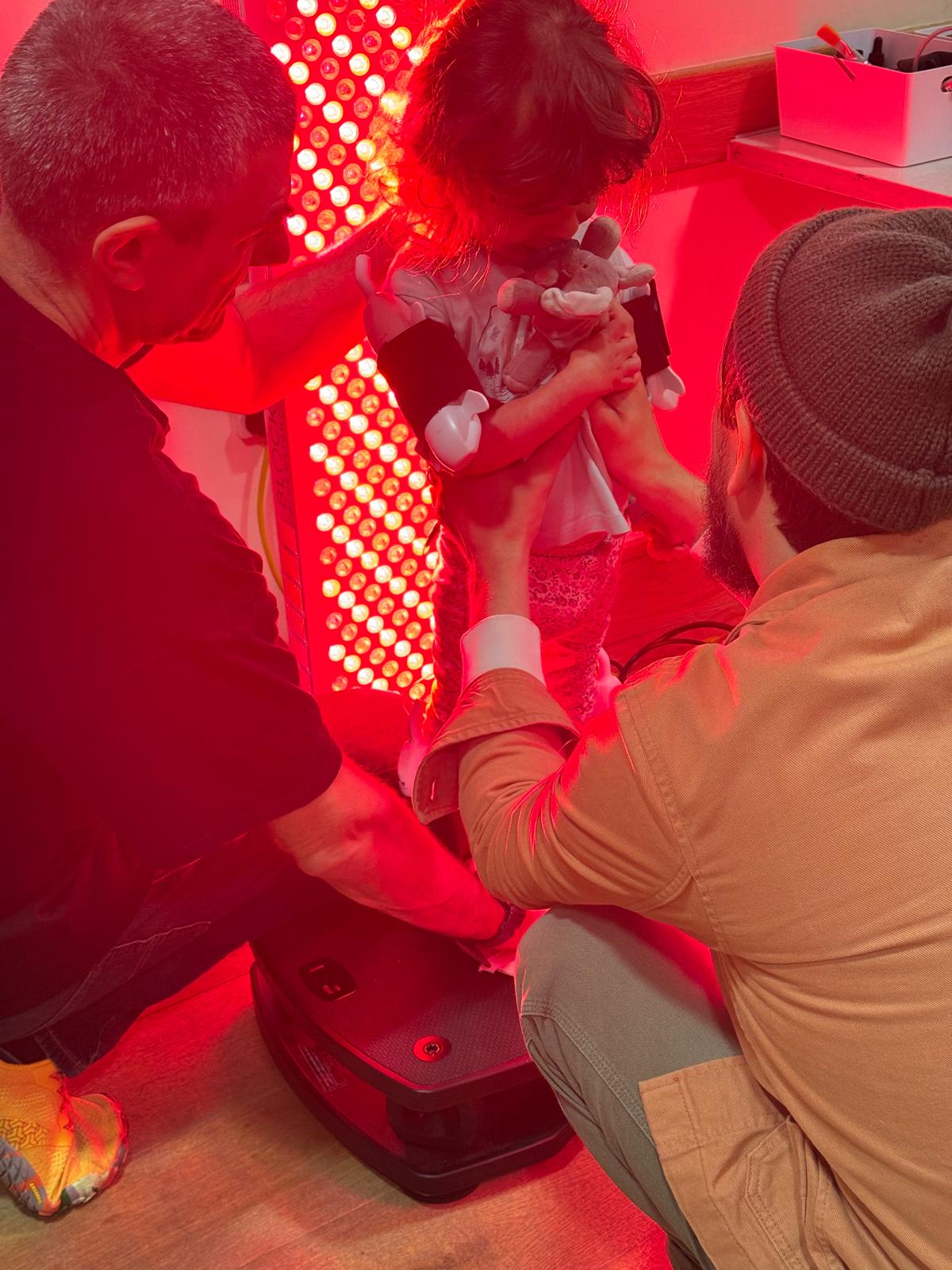
Book a free 15 minute call with Adi or Dana. No pressure, no jargon. Just an honest conversation about your child and where to start. Available in clinic or online.
1A Hall Lane, Mill Hill, London NW4 4TJ · Remote support worldwide · Mon to Sat 9am to 2pm


