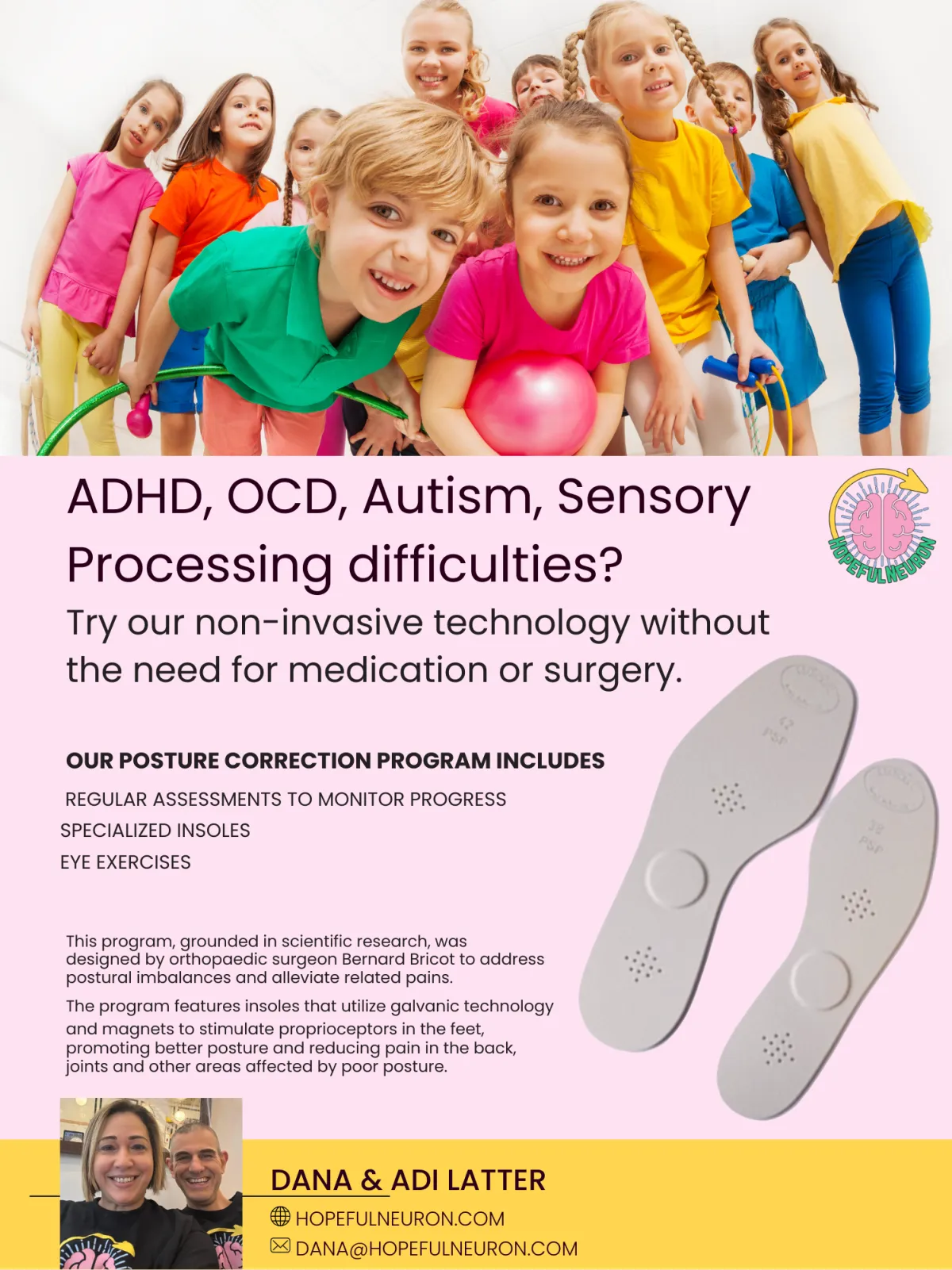
If your child slouches, toe walks, keeps falling over or has poor balance, their brain may not be getting the right signals from their feet and eyes. Our Posture Wellness Programme addresses the neurological root of postural problems in children with ADHD, autism and developmental challenges.
Parents come to us because their child is struggling with posture and movement in ways that nobody has been able to explain. If you recognise any of these signs, there is a neurological reason behind them and it can be addressed.
"Trying harder will not fix a posture problem driven by the nervous system. Correcting the signals the brain receives changes everything."
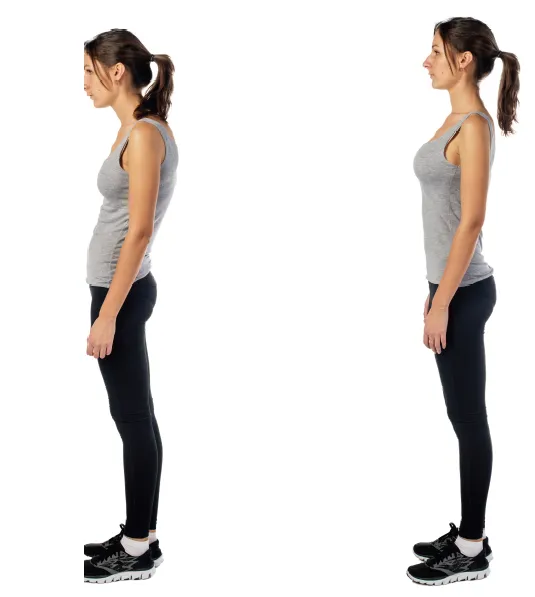
Most people think posture is about reminding yourself to sit up straight. It is not. Posture is governed by the unconscious brain — the same part that controls your heart rate and breathing. You cannot think your way to better posture. But you can give the brain better information to work with.
Sensory receptors in the soles of the feet send constant positional information to the brain and spinal muscles. Research shows that 72% of people have some form of foot imbalance, meaning the information the brain receives is inaccurate. When the brain gets the wrong data, the whole body compensates incorrectly and poor posture is the result.
Eye muscles work with the vestibular system to keep the horizon stable and the body upright. Eye muscle imbalances are remarkably common, affecting approximately 9 in 10 people to some degree. When the eyes struggle to stabilise, the neck, shoulders and spine all compensate — creating the tension and asymmetry parents can see. Eye tracking difficulties also directly affect reading and learning.
Primitive reflexes are movement patterns babies are born with that should switch off in the first year of life. When reflexes like the Tonic Labyrinthine Reflex remain active, they interfere with muscle tone and postural control from the inside out. This is why toe walking, poor core strength and forward head posture are so common in children with ADHD, autism and developmental challenges.
Our Posture Wellness Programme combines three carefully connected elements that work together to correct the information the brain is receiving, so the body can find its natural alignment without force or effort.
The insoles used in our programme were developed by French orthopaedic surgeon Bernard Bricot, whose work forms the basis of posturology as a clinical discipline. They use galvanic technology and magnets to stimulate proprioceptors in the soles of the feet, sending more accurate positional signals to the nervous system and brain.
The insoles do not mechanically push the body into a new position. Instead they prompt the nervous system to make its own corrections naturally, from the inside out. Many children and parents notice changes in standing posture, balance and even comfort within the first few weeks of wearing them consistently.
Eye exercises designed for postural correction are very different from standard vision therapy. We use specific eye movement patterns that activate the vestibular system and help the brain recalibrate how the body holds itself upright. These exercises are short, do not require any equipment, and are done at home as part of a daily routine.
For children with reading difficulties, poor concentration or difficulty copying from the board, the eye tracking component of this programme often produces noticeable improvements alongside the postural ones. The eyes and posture are far more connected than most people realise.
Some postural problems in children have their root in primitive reflexes that should have switched off in infancy but remain active. The Tonic Labyrinthine Reflex, for example, directly affects muscle tone in the neck, back and legs. When retained it can cause toe walking, poor core strength and the forward slump parents find themselves correcting over and over.
Through gentle, structured movement exercises drawn from the Melillo Method, we help the nervous system integrate these patterns so the body can organise itself correctly. This is work that produces changes well beyond posture, including improvements in focus, emotional regulation, sensory processing and learning.
A posture programme for a child with developmental challenges works best when parents understand what they are seeing and know what to do with it. We provide regular consultations to review your child's progress, adjust the programme as they develop, and answer every question you have along the way.
Parents tell us that the ongoing support and clear explanations make the biggest difference to how consistently they are able to implement the programme at home. And consistency is what produces lasting change. You have unlimited access to guidance throughout your programme, at no extra cost.
Postural improvements often come with changes parents were not expecting. When the nervous system organises itself better, the effects are felt across the whole child.
Fewer falls, more confident physical play, and heels coming down to the floor in children who were toe walking.
Children who previously slumped or needed constant repositioning find it much easier to maintain a working position for longer.
Eye tracking improvements that come with postural work often make reading, writing and classroom tasks noticeably easier.
Children begin to engage more willingly in physical activities as their body feels more stable and reliable underneath them.
When the body is better aligned, the brain does not have to work as hard simply to stay upright. Children often become calmer and less easily overwhelmed.
Children who feel steady in their bodies take on new challenges more willingly. Parents notice more independence and a shift in how their child sees themselves.
We know you have questions. Here are the ones we hear most often. If yours is not here, book a free call and we will answer it personally.
Adi and Dana are parents and Melillo Method certified posturologists. They answer every question personally.
Book a free call →If you have been searching for help with your child's poor posture, toe walking or balance problems, you have probably already been told to remind them to sit up straight, to try physiotherapy, or simply to wait and see if they grow out of it. Most parents of children with ADHD and autism find that these approaches do not produce lasting change because they are working on the symptom rather than the cause.
Posture in children with ADHD and autism is often driven by factors that sitting up straight exercises cannot reach. Retained primitive reflexes like the Tonic Labyrinthine Reflex directly interfere with muscle tone and the body's ability to hold itself upright. Foot posture imbalances send inaccurate signals to the brain that the brain then faithfully compensates for, creating the very asymmetry you can see. Eye muscle imbalances destabilise the whole system further. Until these foundations are addressed, postural reminders and stretching exercises produce temporary changes at best.
One of the most overlooked connections in children with learning difficulties is the relationship between postural stability and cognitive function. When a child's body is working hard just to stay upright, the brain has less capacity available for attention, processing and emotional regulation. Children who are constantly described as fidgety in class, who slump across the desk, or who cannot seem to sit still for more than a few minutes are often experiencing genuine neurological difficulty with postural stability. Addressing this foundation frequently produces improvements in focus and classroom behaviour that parents were not expecting.
Toe walking is one of the most frequently searched questions by parents of autistic children in the UK. The connection between toe walking, the Tonic Labyrinthine Reflex and the sympathetic nervous system is well documented within posturology and neurodevelopmental approaches. Our programme addresses the neurological root of toe walking rather than using splinting, orthotics or repeated reminders — all of which manage the behaviour without changing the underlying cause.
Hopeful Neuron is based in Mill Hill, London NW4, and we support families locally and throughout the UK and worldwide via our remote programme. Our Posture Wellness Programme is suitable for children of all ages and abilities, including children with autism spectrum disorder, ADHD, sensory processing difficulties, dyspraxia and other developmental challenges. If you would like to understand whether our programme is right for your child, book a free call and we will answer all of your questions.