Your child is not the problem.
But what you have been told
to focus on might be.
If nothing you have tried is working, this is usually why.
This is not another therapy to try.
We help children who cannot sit still, melt down over small things, or struggle to communicate, by working with the brain and body first.
You are exhausted. You have tried strategy after strategy. Nothing sticks.
There is a reason nothing has worked consistently, and it is not your child. The reason, in nearly every case we see, is that behaviour strategies cannot work until the nervous system feels safe. That is the step most people skip. That is what we fix first.
one free call tells you exactly what to work on first
Method
β β β β β"Within 6 weeks our son was sleeping through the night for the first time in 4 years."
Sarah M. London
Parents & Practitioners
We have sat in
that waiting room too.
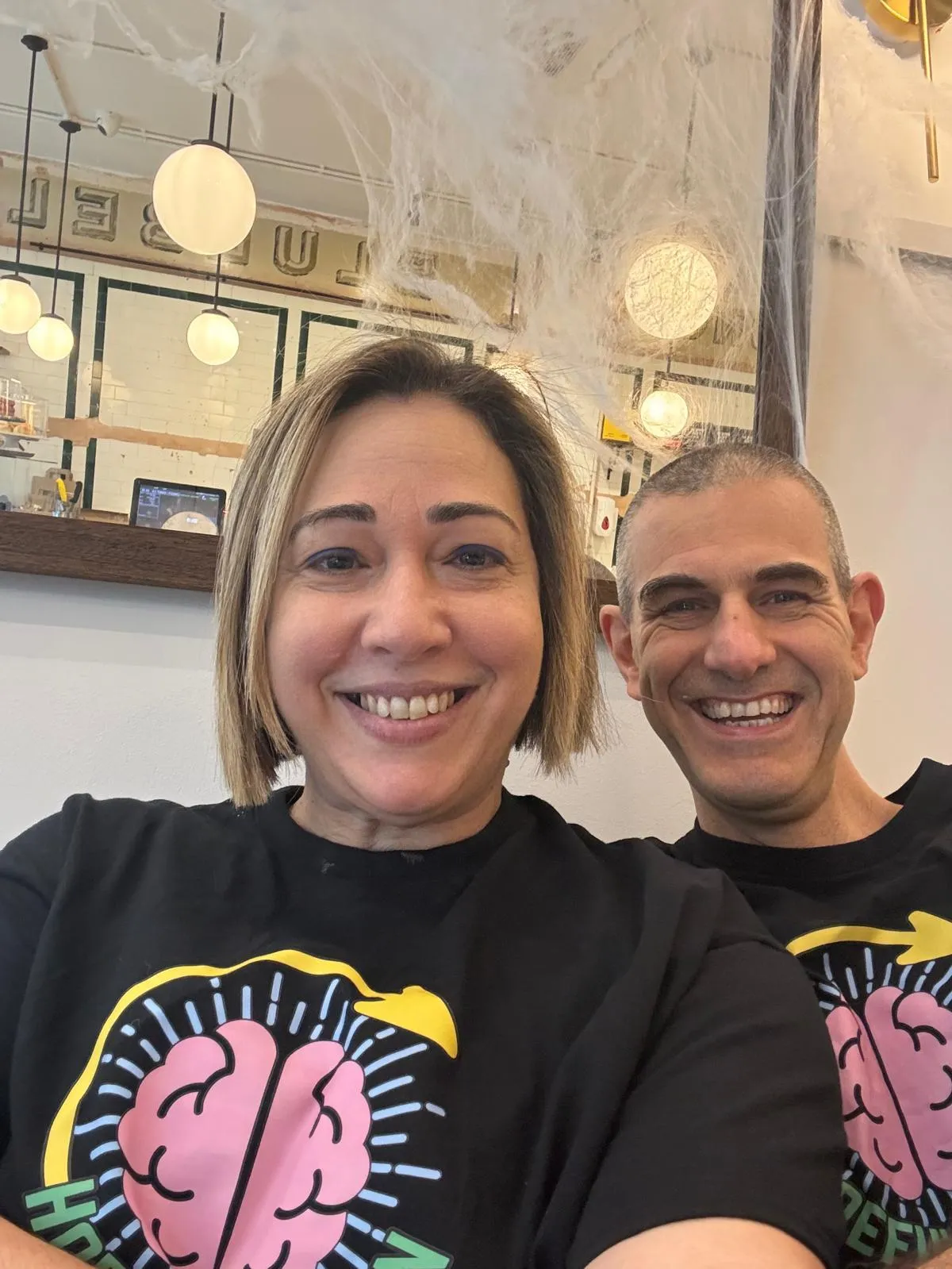
We are Adi and Dana. We are practitioners. But before any of that, we are parents who have been exactly where you are. We have been the parents trying everything and wondering why nothing was sticking. We know what it is like to leave a professional's appointment with a leaflet and a six month waiting list. To try something new and not know if it is helping. To wonder every day if you are doing enough.
That is why we trained in the Melillo Method and spent years understanding how the nervous system, posture and movement all connect. Because when you get to the root of what is happening, things actually start to change.
We built Hopeful Neuron so families in Mill Hill, London and North London, and worldwide online, would have somewhere to go when the NHS waiting list is not an option and you cannot afford to keep waiting.
Does any of
this sound like your house?
Most parents come to us after trying multiple things. Therapy. Strategies. Appointments. Nothing sticks long term. You are not imagining it, and you are not making it worse. What you are seeing every day has a reason, and it is not about behaviour or discipline.
"If you read any of those and thought: yes, that is our house. You are not alone. And you do not have to keep figuring it out by yourself."
Find your starting point βMost therapies fail for one reason.
They start with behaviour. That is why progress feels inconsistent.
Behaviour strategies cannot work until the nervous system feels safe. Until this is addressed, nothing sticks long term. That is what we fix first, before anything else.
Most parents start noticing small changes within the first few weeks. Sleep usually shifts first. Then behaviour. Then focus.
Understand what is actually causing the struggle
Not the label. Not the surface behaviour.
We look at the nervous system, retained primitive reflexes, posture and balance. Things most assessments never touch. In most cases, this is where we find the missing piece.
Target the brain systems that need support
Gentle movement exercises. Ten to fifteen minutes a day.
Not another strategy to manage behaviour. Specific work on the brain and nervous system. The bit that actually needs to change. Everything fits into real family life.
Help you implement this at home without overwhelm
Most parents notice something shifting within the first four to six weeks. Sleep usually comes first. Then behaviour. Then focus.
We are with you throughout. Not just at the start. You can reach us when something changes or you are not sure what you are seeing.
The Hopeful Neuron Method
By the time parents come to us, they have usually tried everything. And none of it has fully worked.
That is not because the approaches were wrong. It is because they were working on the wrong layer. This is not another behaviour strategy. We work on the brain first. When the brain changes, behaviour follows.
This is the sequence we use with every child, and why each step has to happen before the next one can work.
The nervous system has to feel safe first
When a child is in fight-or-flight, nothing works. They cannot listen. Cannot learn. Cannot connect. This is the pattern we see in almost every child we work with.
Most approaches miss this step completely. Skip it and nothing sticks. Not long term.
Switch off the reflexes that are still running
Retained primitive reflexes are one of the most common things we find, and one of the least talked about.
This is where things usually go wrong. They cause children to get up ten times during a meal. To panic at a change in routine. To struggle to hold a pencil. Specific movement helps the brain finally finish what it started in infancy.
Build the bridge between body and brain
The cerebellum links movement to thinking, attention and learning. When we strengthen it through balance and coordination work, this is usually when parents start texting us.
A morning that went smoothly. Sitting through dinner. A teacher saying something changed.
Now the skills everyone has been working on can actually land
Focus. Communication. Independence. Friendships.
Not because they tried harder. Not because the strategy finally clicked. Because the brain is now able to access these things. This is why we work on the brain first, not last.
We don't start where
most therapies start.
Most approaches begin with behaviour. We begin with the nervous system.
This is where most approaches fall apart. They are working on the wrong layer. And until the nervous system foundation is in place, nothing else fully lands.
When the brain and body are working together, behaviour becomes easier. Not forced. That is our edge and that is what makes the difference for families who have already tried everything else.
What parents
actually message us about.
It is never the big stuff first.
It is a morning that did not turn into a fight. A meal where everyone sat down. A teacher saying something is different.
The bigger changes follow. But parents always notice the small things first, usually within the first few weeks.
The reactions get smaller
Not gone overnight. But the meltdowns that used to last an hour start lasting ten minutes. Then five. That gap matters more than people realise.
School stops being a battle
A teacher notices something. They can sit through a lesson. The work that used to feel impossible starts feeling hard but doable. That shift changes everything.
Mornings become manageable
Getting dressed. Eating breakfast. Leaving the house on time. Still not effortless. But not a daily crisis either. Parents tell us this one lands harder than they expected.
Sleep starts working
This is usually the first thing parents notice. Getting to sleep gets easier. Staying asleep gets easier. When the whole house is sleeping, everything else feels different.
Words come more easily
The gap between what they feel and what they can say starts to close. Less frustration. Fewer meltdowns that came from not being able to get it out.
They start joining in
Sport. Playground games. Things they used to avoid. Physical confidence comes with it, and it changes how they see themselves.
They try things without being pushed
Small moments of independence that were not there before. Getting dressed without being asked. Starting homework without a fight. You notice the shift before you can name it.
Home feels different
More laughter. Less bracing for the next thing. You stop dreading the end of the school day. The whole family feels it when a child starts to feel okay.
In their own
words.
These are the kind of changes parents did not think were possible anymore.
We do not write these. We do not edit them. These are parents who wanted other parents to know what happened.
"Within 6 weeks our son was sleeping through the night for the first time in 4 years. His teacher called to ask what had changed. We couldn't believe it."
"Adi and Dana are the first practitioners who made us feel truly understood. They explained everything clearly and were there whenever we had questions."
"Our mornings went from absolute chaos to manageable. My daughter is calmer, more focused, and happier. I only wish we'd found this sooner."
Want to understand
what is going on?
Things parents
always ask us
You are probably doing a lot of research right now. These are the things that come up in almost every first conversation we have.
No. Many of the families we work with are still on waiting lists or have not yet pursued a diagnosis at all. If you are seeing things that concern you, meltdowns, focus problems, sleep difficulties, sensory reactions, that is enough. You do not need a piece of paper to get started.
From around age 3 through to teenagers. We also have a specific programme for older students who need support with focus and learning before exams. Everything we do is adapted for the child in front of us, not a generic age group.
Yes, completely. A large part of what we do is remote. Families in the US, Australia, Israel and all over Europe work with us online and get exactly the same level of support. The exercises all work at home. You do not need to be near London.
Babies are born with a set of automatic movement patterns called primitive reflexes. They should switch off in the first couple of years of life as the brain develops. When they stay active, which happens more often than most people realise, they quietly interfere with focus, attention, posture, sleep and how children handle their feelings. We use gentle movement exercises to help the brain finish the process it started.
Many parents notice something shifting within four to eight weeks, often in sleep first, then behaviour, then focus. It is not always dramatic in the early stages. Sometimes it is a morning that went smoothly, or a teacher saying something positive. We track progress with you throughout so you always know how things are moving.
No. Occupational therapy and speech therapy are valuable and we work well alongside them. What we do differently is look at why the difficulties exist at the nervous system level, rather than working on the symptoms directly. A lot of families find that when the nervous system is more settled, their other therapies start working better too.
Stop guessing what
to work on next.
Get clarity on your first step.
Tell us what is happening. We will tell you honestly what we think is going on, whether we can help, and exactly what we would focus on first. No pressure. No sales pitch. No jargon.
Most parents leave that call knowing more than they did from months of appointments.
π 1A Hall Lane, Mill Hill, London NW4 4TJ Β· π Remote support worldwide Β· Mon to Sat, 9am to 2pm