Baby and toddler motor delay in London: what to do first.
If you're up late googling why your little one isn't sitting, crawling or walking yet, you're not alone. Plenty of babies get there later than the books say. Sometimes there's more to it, and it's worth finding out early.
The first step is your GP or health visitor. We work alongside them, and we can help from 18 months.
No obligation. No diagnosis needed. Just fifteen minutes with Adi and Dana.
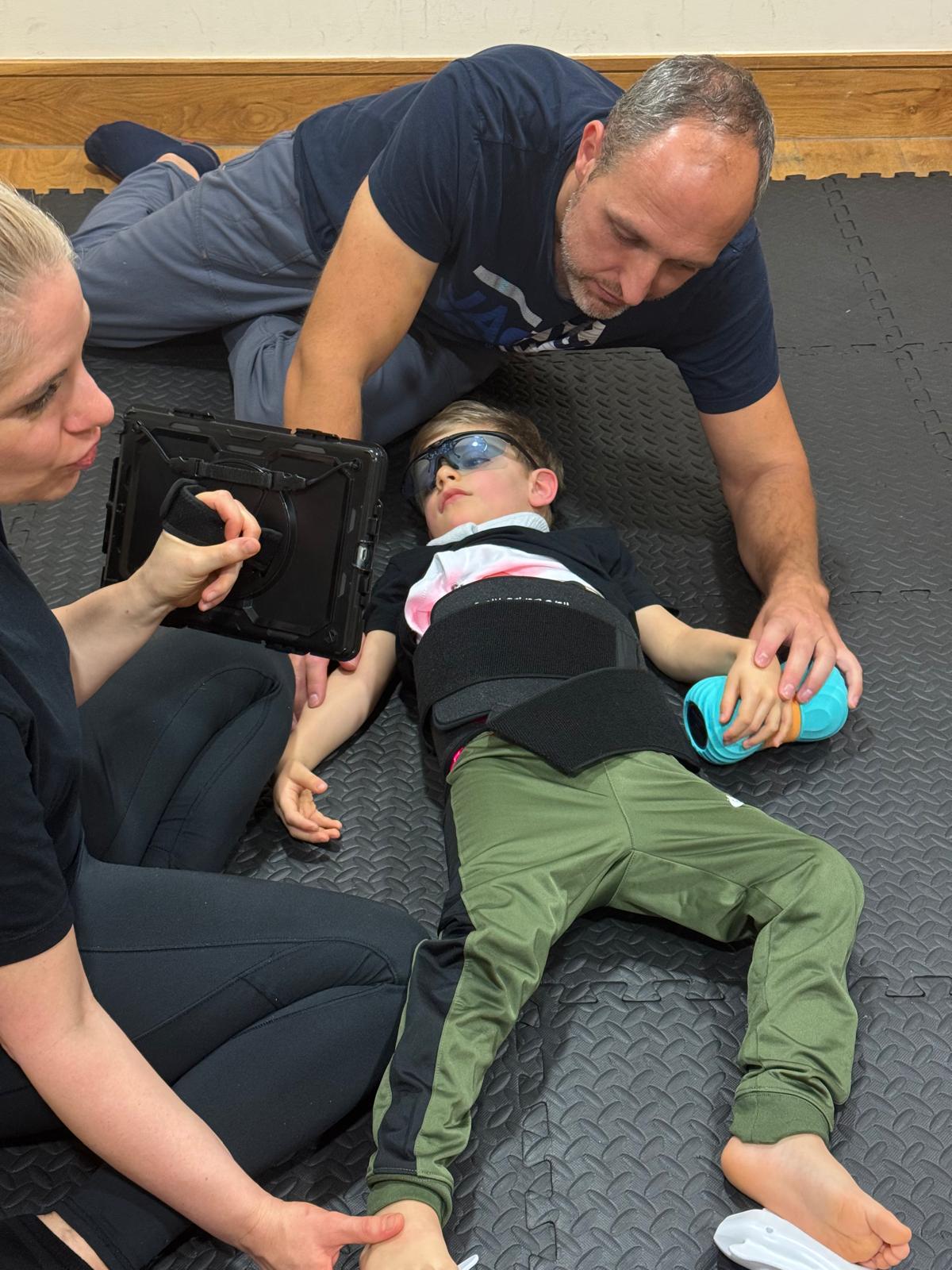
A session in our Mill Hill clinic
- See your GP or health visitor first. They can rule out anything medical and refer you to a paediatric physiotherapist.
- Ask for advice if your baby isn't trying to stand by around 12 months, or isn't walking on their own by 18 months. Sooner, if you're worried.
- We support children from 18 months, alongside NHS care. We look at reflexes, balance and posture, and give you a play based plan for home.
- We can't promise a child will walk by a certain age.
See your GP or health visitor first if:
Any of these is a good reason to ask, and they can refer you to a paediatric physiotherapist or a paediatrician.
- Your baby isn't trying to stand or take weight through their legs by around 12 months
- Your child isn't walking on their own by 18 months
- They've lost a skill they used to have
- They feel very floppy, or very stiff
- One side of their body moves differently from the other
- You just have a feeling something isn't right. Go with it
For urgent advice, contact your GP or call NHS 111. We work alongside your medical team, never instead of them.
What does motor delay look like?
Motor delay just means a child is later than expected with movement milestones like rolling, sitting, crawling, standing or walking. Lots of children are simply late. These are the things parents mention to us most, and each one can have several causes.
Why is my child late with movement?
There isn't one answer, and working out which one applies is a doctor's job. Some children run in families, and you or your partner walked late too. Some have low muscle tone or very flexible joints. Babies born early often reach milestones a bit later. And occasionally there's a medical or neurological reason, which is exactly why the GP visit comes first.
Once that's been looked at, a lot of parents still want to know what else they can do at home. That's where we come in.
Where reflexes and balance come in
Babies are born with automatic movements called primitive reflexes. They help in the first months, then they're meant to fade as the brain matures. One of them, the STNR, helps a baby get up onto hands and knees and crawl. It normally fades somewhere around 8 to 11 months.
When early reflexes hang around, they can be one piece of why a child struggles with balance, posture or coordination. Rarely the only piece, which is why we work with your medical team and not around them.
What we can't do. We can't promise your child will walk by a certain age, or that a plan will change what's behind the delay. If we think you need a specialist first, we'll tell you.
How we can help from 18 months
See your GP or health visitor
Rule out anything medical, and keep any physiotherapy they arrange.
Talk to us
A free call. Tell us what you're seeing and what you've been told so far.
A plan for home
Play based movement you do together, with coaching from us.
You know your child. We know where to look.
We work with your NHS team
Your GP, physiotherapist and paediatrician stay in charge. We add to what they're doing.
You get coached, not handed a leaflet
You're in the room for every decision, and we stay in touch while you do the plan at home.
In clinic or online
Mill Hill, London, or from your living room. We'll say which suits your child's age and needs.
In parents' own words.
"Dana and Adi are a great team, incredibly knowledgeable and supportive. They always found a way to help our son and gave us the strength to do the same at home."
"Very caring and truly have your best interests at heart. Check ins from Dana help keep you focused on working at home. Highly recommend."
"Adi and Dana explained things in a way that finally made sense. We understood why, not just what to do."
Questions parents ask about motor delay
What happens on the free call?
You tell us what's going on
Just tell us what you're seeing and what you've already tried. No forms first.
We tell you what we think
In plain language. If we think you should see a doctor or specialist first, we'll say so.
You decide, no pressure
If it's a fit, we'll talk next steps. If not, we'll tell you that too.
Book a free 15 minute call with Adi & Dana.
No waiting list, no diagnosis needed, and no pressure to commit to anything. Just a straight conversation with two people who've been where you are.
Keep reading.
Primitive reflexes explained →
The six reflexes we look at most.
The Melillo Method in the UK →
What it is and how to find a practitioner.
Sensory processing support →
Support beyond the sensory diet.
A remote look at your child →
Find out what is going on, plus a plan.
Clarity Day in Mill Hill →
One day in clinic to see your child hands on.
Support across London →
How we help families across London.
This page is general information for parents. It is not medical advice and it does not replace advice from your GP, health visitor, paediatrician or other health professional.


