Sensory support that starts with the nervous system, not the sensory diet.
For children with sensory processing differences, ages 18 months to 18 years. In person in Mill Hill, or online.
You've tried the weighted blankets, the chewy tools, the sensory diet from OT. It may not have fully clicked because most support manages the sensitivity you can see, like the meltdown over a tag or a texture. We look at the nervous system underneath as well, and we work alongside what's already in place.
On a free 15 minute call, we'll tell you honestly what we think is going on, and whether we can help.
No obligation. No diagnosis needed. Just fifteen minutes with Adi and Dana.
A message from Adi & Dana, parents and Melillo Method practitioners
- We support children with sensory processing differences, like tags that feel unbearable, noise that overwhelms or foods they can't tolerate, by looking at the nervous system underneath, through balance, movement and primitive reflex work.
- It's designed to sit alongside occupational therapy, sensory diets and any other help your child has. It isn't a replacement for any of them.
- Research on our approach for sensory processing is limited. We can't promise particular results, and we'll tell you honestly on the call whether we think we can help.
- You don't need a diagnosis. You can start with a free 15 minute call, and we're in Mill Hill, London, or online.
Does any of this sound like your house?
Most families who come to us for sensory processing support have already been trying for a long time. What you're seeing has a reason, and it isn't about parenting or a lack of effort on your child's part.
You know your child. We know where to look.
Every family that reaches out to us has already been through a lot. Here's what makes our approach different.
Personalised programmes
No two children get the same plan. Every programme is built around your child's profile and what your family is dealing with right now.
Parent led support and coaching
You're in the room for every decision. We coach you through the home exercises so progress keeps going long after the session ends.
Whole child approach
We look at the nervous system, body and brain together, not one symptom at a time. In real life they're never separate.
In person Intensive Training
A dedicated week in our Mill Hill clinic for families who want hands on, in person support.
Remote programmes worldwide
Support from home, wherever you are. Families in the US, Australia, Israel and across Europe follow the same structure we use in clinic, over video.
No diagnosis needed, and it's not instead of OT or a sensory diet. We work alongside everyone already supporting your child, looking at why the sensitivities are there at the nervous system level.
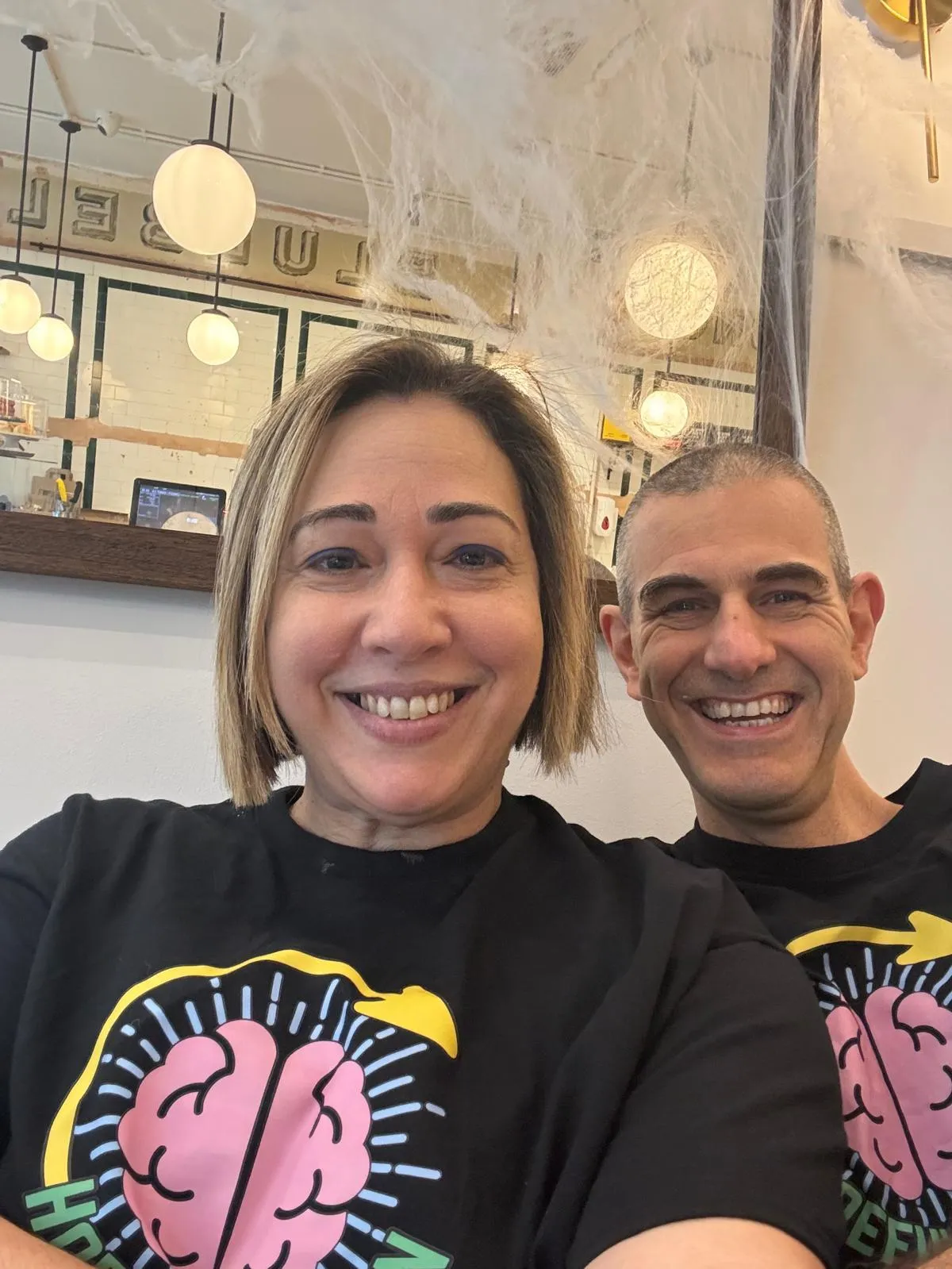
Parents first, practitioners second.
Our older son didn't speak until he was five, and that's where this started. Today he's fully verbal, has finished his GCSEs, has friends and is independent. We've spent over 20 years in developmental therapies since, and we've both been Melillo Method certified since 2022.
We know the waiting lists, the tools and the strategies that don't quite work. Read our full story →
Why the usual approaches haven't fully worked.
Most sensory support helps manage the reaction, and that matters. We would never suggest you stop it. We also look underneath, at the nervous system, because we think sensory reactions can be a symptom of how the nervous system registers and filters input. In plain terms, here is the order we work in.
Regulation
Help the nervous system feel safe, so your child isn't stuck in fight, flight or shutdown.
Movement
Build balance, coordination and body awareness, the physical foundation the brain relies on.
Reflexes
Gently help early automatic reflexes finish switching off, so they stop getting in the way.
Learning & Communication
Filtering, tolerance and calm get a steadier base to build on.
Want the science behind each stage? Here's how it maps to the nervous system.
Safety first. The nervous system has to come out of survival mode.
A child stuck in fight, flight or shutdown finds it much harder to filter sensory input calmly. We think it's a step that often gets missed.
Switch off the reflexes that never finished developing.
In the model we work with, primitive reflexes that haven't switched off can contribute to touch sensitivity, sound sensitivity and difficulty with textures. Read our guide to primitive reflexes →
Strengthen the bridge between body and brain.
We work on balance and coordination because we think they support how the nervous system filters and organises sensory input.
Now tolerance, filtering and calm have somewhere to grow from.
The aim is to give tolerance, filtering and calm a steadier base to grow from.
1000+
Families supported across London and internationally
5★
Every review from parents who felt heard
100%
Individual programmes, built around your child
What happens on the free call?
A short, honest conversation. Not a sales pitch.
You tell us what's going on
What you're seeing at home, at school and socially, in your own words.
We share what we think it is
Which part of the nervous system may be involved, and how we'd approach it.
You decide, no pressure
If it's a fit, we tell you what's next. If it's not, we'll say so honestly.
In just 15 minutes, you'll walk away with real answers.
- Why your child may still be struggling despite the sensory diet, tools and appointments
- Which part of the nervous system may be involved in what you're seeing at home
- Whether our sensory processing support is the right fit, or if something else would serve your child better
No pressure to book anything further. Just clarity, from two people who've been where you are.
In their own words.
"After an intensive week with Dana and Adi, we saw improvement in our son's behaviour. He is calmer now, his focus has improved and his sleep has improved."
"Dana and Adi are a great team, incredibly knowledgeable and supportive. They always found a way to help our son and gave us the strength to do the same at home."
"Very caring and truly have your best interests at heart. Check ins from Dana help keep you focused on working at home. Highly recommend."
Things parents ask us about sensory processing.
Book a free 15 minute call with Adi & Dana.
No waiting list, no diagnosis needed, and no pressure to commit to anything. Just a straight conversation with two people who've been where you are.
Want to understand what is going on?
Primitive reflexes explained →
What they are, and what the research does and doesn't show.
The Melillo Method in the UK →
What it is, and how to find a practitioner.
Autism Support →
When sensory differences sit alongside autism.
Clarity Day →
One day in clinic in Mill Hill to get clear answers and a plan.
The Remote Programme →
Support from home, wherever you are.
The science behind it all →
The neuroscience in plain English.
This page is general information for parents. It is not medical advice, and it does not replace advice from your GP, your child's occupational therapist or another qualified professional.


